
I don't have children, so I do not have first-hand knowledge of how difficult they are to raise. I was a child years ago, and although my upbringing was painful and imperfect, my rearing was, in my opinion, better than the cushy, entitled lives I see so many children experiencing today.
The evening was too chilly to sit outside, so Elizabeth and I chose a tiny table in our favorite (crowded) Starbucks. A young couple with two children sat beside us. Unfortunately, a second glance their way revealed they were neighbors, so stupid small talk ensued. Elizabeth knows these neighbors better than I, for the mother has had to "rescue" my friend from 4-year-old Reagan, the little girl, who likes to run after Elizabeth, grab her clothes, and insist that she go into "time-out" whenever Elizabeth walks past their house. So I let Elizabeth do the talking while I sat quietly and observed the girl.
The parents had stopped at Starbucks at Reagan's request. The little girl wanted a slice of lemon pound cake, and her demand for dessert delayed four people in their evening plans. Their only purchase was the pound cake, which they handed over to Alpha Girl, who grabbed the whole slice and began eating down the center. Two towers of pound cake collapsed on either side of her mouth like the World Trade Center on 9/11. Crumbs and bigger chunks fell on the table, the chair, and the floor. When Alpha Girl had enough, her mother poked through the debris—telling Alpha Girl that she was so good to share—and gave pieces to the 2-year-old boy who crushed them in his little fist and, like Jackson Pollock flinging paint on canvas, further decorated the area. "He's much less verbal than Reagan was at his age," the father remarked, "but he's well above average!" Whatever you have to tell yourself, I thought.
A third adult joined the family, a bad-boy hipster with elaborate sideburns. Wolverine sneered at the mess and noted that they would be late if they didn't hurry up. Jackets were donned, bags and children grabbed, and then the five of them headed for the door. When the father discovered that the boy was still clutching a piece of pound cake, he slapped the kid's hand, sending a final spray of crumbs in our direction. Dad looked back and said, "I'll be right back to clean that up!" Of course, he never returned.
I know that wiping tables and mopping floors are responsibilities of the Starbucks crew, but I was appalled that three adults felt entitled to leave a table that messy. New arrivals couldn't sit there unless they took on the job of cleaning up the disaster these assholes thoughtlessly made. Elizabeth and I were stuck looking at it, and, because we had been talking to them, were getting looks from other patrons as if the eyesore was our responsibility.
As a child, I would have loved parents who always let me have my way and who held me accountable for nothing. I can only imagine how much my confidence would have grown if my desires and happiness made a difference to Mom and Dad. I couldn't get my parents to stop to let me pee—"Hold it until we get home," my father would have growled—let alone divert them for food I alone desired. My parents would never have allowed me to make such a mess in public; I remember orders to brush the salt grains off Burger King tables so that the minimum-wage staff wouldn't think my family and I were pigs. As a result of my raising, I know that I am not the center of the universe, and I am glad that I learned that fact early. I feel sorry for Reagan, who might have alpha status right now but will learn soon enough that the rest of the world won't cater to her whims as Mom and Dad do.
Showing posts with label musings. Show all posts
Showing posts with label musings. Show all posts
Monday, December 28, 2009
Monday, March 2, 2009
When Things Work and When They Don't
Our favorite barista invited Elizabeth and me to meet Howard Schultz, the CEO of Starbucks. He is, we learned, visiting individual stores all over the country, talking to patrons, trying to determine what can be done differently/better since the current recession is the first time in Starbucks history when profits/growth have declined. Any caffeine fiend without a special invitation had to peer at us through the plate glass as the staff served custom drinks in ceramic mugs and slices of cake decorated with whipped cream and cut flowers. When Mr. Schultz asked for feedback—either positive or negative—the invited guests offered praise and complaints. I enjoyed watching a billionaire honestly engage his customers. He admitted when he thought the company made mistakes; he talked with great passion about health coverage for his employees and ethical farming. He was nothing like the banking and automobile execs dodging questions before Congress.
One story he told got me thinking. During a recent visit to New York City, he walked into a filthy Starbucks. He explained that the mess wasn't the result of a busy lunch hour when the employees were too overwhelmed to keep up with cleaning. No, this filth was established. He then bemoaned the difficulty of finding store managers with the leadership skills to run each individual location in an ideal manner. We could all relate. Throughout my city are Chick-fil-As and Burger Kings that I refuse to enter, and yet I know individual stores where the employees keep the tables shiny and the fries hot.
Unlike Mr. Schultz, I think a well-run store is not entirely up to the manager, that location and the corresponding clientele make a difference. When a number of guests bitched about the Starbucks near the university, several people noted that rude workers staffed every food and beverage location in that area, that students serving—for the most part—other students were bound to be surly. Elizabeth and I once ordered coffee from the Starbucks at the Florida Mall. The store was a pigsty; we watched unoccupied employees ignore the mess. We surmised that the store atmosphere which we so prized at our regular Starbucks could not develop in a location where tourists visited a single time, and the lack of intimacy affected the attitude of the employees.
In the classroom, student mix can handicap an otherwise effective professor in the same way. I have gotten enough feedback—on classroom visits by the dean, on student evaluations, in comments at RateMyProfessors—to know that I am a good teacher. But my classroom leadership skills do not mean every section of a class goes equally well. I can adjust my methods so that if I have a really extroverted class, I tone down my own enthusiasm to keep the top from blowing off, and if I have a reticent class, I have a few tricks to get the reluctant participating. Even so, some classes, despite what I try, fail to respond, and four, five, six weeks into the semester, I give up on ever enjoying them; I count down the days until final exams.
This semester, I have thrown up my hands in one section of freshman composition. On Mondays and Wednesdays, I have a group I love, whose papers I enjoy reading. After grading a set of essays, I pick out the four best titles, the four best thesis statements, the two best introductions, and read them aloud; then I let students vote on which ones they like the best, rewarding the winners with candy bars purchased from the book store. The class has gotten very competitive composing those introductory parts of an essay where the writer grabs or loses the reader's attention. Does the other class get candy? No way. The students are cowardly automatons, afraid to have an original thought that might distance them from the safety of their boring peers. For them, I bring grammar worksheets. And if I were Howard Schultz and they were one of my Starbucks stores, I'd immediately close the doors and lay off the workers. Unfortunately, I'll still be serving up composition instruction every Tuesday and Thursday until late April.
One story he told got me thinking. During a recent visit to New York City, he walked into a filthy Starbucks. He explained that the mess wasn't the result of a busy lunch hour when the employees were too overwhelmed to keep up with cleaning. No, this filth was established. He then bemoaned the difficulty of finding store managers with the leadership skills to run each individual location in an ideal manner. We could all relate. Throughout my city are Chick-fil-As and Burger Kings that I refuse to enter, and yet I know individual stores where the employees keep the tables shiny and the fries hot.
Unlike Mr. Schultz, I think a well-run store is not entirely up to the manager, that location and the corresponding clientele make a difference. When a number of guests bitched about the Starbucks near the university, several people noted that rude workers staffed every food and beverage location in that area, that students serving—for the most part—other students were bound to be surly. Elizabeth and I once ordered coffee from the Starbucks at the Florida Mall. The store was a pigsty; we watched unoccupied employees ignore the mess. We surmised that the store atmosphere which we so prized at our regular Starbucks could not develop in a location where tourists visited a single time, and the lack of intimacy affected the attitude of the employees.
In the classroom, student mix can handicap an otherwise effective professor in the same way. I have gotten enough feedback—on classroom visits by the dean, on student evaluations, in comments at RateMyProfessors—to know that I am a good teacher. But my classroom leadership skills do not mean every section of a class goes equally well. I can adjust my methods so that if I have a really extroverted class, I tone down my own enthusiasm to keep the top from blowing off, and if I have a reticent class, I have a few tricks to get the reluctant participating. Even so, some classes, despite what I try, fail to respond, and four, five, six weeks into the semester, I give up on ever enjoying them; I count down the days until final exams.
This semester, I have thrown up my hands in one section of freshman composition. On Mondays and Wednesdays, I have a group I love, whose papers I enjoy reading. After grading a set of essays, I pick out the four best titles, the four best thesis statements, the two best introductions, and read them aloud; then I let students vote on which ones they like the best, rewarding the winners with candy bars purchased from the book store. The class has gotten very competitive composing those introductory parts of an essay where the writer grabs or loses the reader's attention. Does the other class get candy? No way. The students are cowardly automatons, afraid to have an original thought that might distance them from the safety of their boring peers. For them, I bring grammar worksheets. And if I were Howard Schultz and they were one of my Starbucks stores, I'd immediately close the doors and lay off the workers. Unfortunately, I'll still be serving up composition instruction every Tuesday and Thursday until late April.


Wednesday, February 7, 2007
Do You Need That Emotion Today?
Elizabeth and I met a friend for lunch. Eventually, Lynda regaled us with tales from her hiking adventure over Christmas break. But first we sat through a long series of complaints: her mother's unrealistic expectations, her boyfriend's refusal to get married, her colleagues' incompetence, her limited income as a single woman in a couple's world. She seemed tired and unhappy, and spring break is still weeks away.
But eventually, Lynda began to recount her trip to Mexico, which included burro riding, all kinds of limit-testing challenges, and beautiful scenery. She stayed at a nice resort in the mountains, and each day her group followed a no-nonsense guide on hikes of various difficulty. Each evening during dinner, the guide would explain the next day's outing, detailing the distance, altitude, level of challenge, and exposure. For Lynda, exposure was the concern; she explained that her fear of heights was something she could control if the trail was wide enough or had natural railings on both sides. But she feared losing her footing and tumbling down the mountain if the trail was narrow and exposed.
One evening, as the guide discussed the next day's challenges, he mentioned that there would be frequent exposure. If any of his hikers thought that they would have a problem, the guide wanted to know immediately.
Lynda went right up to say that she was using this trip to work on her fear of heights, but after his description of the upcoming hike, she thought that she would just relax at the resort.
"He looked right at me and asked, 'Do you need that fear tomorrow?' Like it was my choice. And you know, when he asked me that way, I believed that it was my choice. I thought a second and told him, 'No, I won't need that fear tomorrow.'"
Lynda seemed to get the lesson about fear but didn't see its carryover to other emotions. I wanted to imitate the guide and ask, "Do you need the unhappiness about your mother today? Do you need the disappointment with your boyfriend and colleagues today? Do you need the worry about your finances today?"
Even though I understand the guide's lesson, I'm sure that I don't apply it either. Do I need this impatience with the computer ignorant today? Do I need this boredom with my life today? And on and on.
Why is it that we see that other people have clear choices, but we don't see our own?
But eventually, Lynda began to recount her trip to Mexico, which included burro riding, all kinds of limit-testing challenges, and beautiful scenery. She stayed at a nice resort in the mountains, and each day her group followed a no-nonsense guide on hikes of various difficulty. Each evening during dinner, the guide would explain the next day's outing, detailing the distance, altitude, level of challenge, and exposure. For Lynda, exposure was the concern; she explained that her fear of heights was something she could control if the trail was wide enough or had natural railings on both sides. But she feared losing her footing and tumbling down the mountain if the trail was narrow and exposed.
One evening, as the guide discussed the next day's challenges, he mentioned that there would be frequent exposure. If any of his hikers thought that they would have a problem, the guide wanted to know immediately.
Lynda went right up to say that she was using this trip to work on her fear of heights, but after his description of the upcoming hike, she thought that she would just relax at the resort.
"He looked right at me and asked, 'Do you need that fear tomorrow?' Like it was my choice. And you know, when he asked me that way, I believed that it was my choice. I thought a second and told him, 'No, I won't need that fear tomorrow.'"
Lynda seemed to get the lesson about fear but didn't see its carryover to other emotions. I wanted to imitate the guide and ask, "Do you need the unhappiness about your mother today? Do you need the disappointment with your boyfriend and colleagues today? Do you need the worry about your finances today?"
Even though I understand the guide's lesson, I'm sure that I don't apply it either. Do I need this impatience with the computer ignorant today? Do I need this boredom with my life today? And on and on.
Why is it that we see that other people have clear choices, but we don't see our own?
Friday, January 26, 2007
Closer to Fine, Closer to Old
 Elizabeth and I went to see the Indigo Girls last night. They performed at the Bob Carr, an intimate venue that seats maybe 500 - 600 people. We enjoyed the opening band, Three5Human, who were so good in a Lenny Kravitz/funk-rock way that I bought their album at iTunes. Three young women got up to dance more often than was polite, waving their wide asses in our faces a little too frequently. But since the three knew all of the words to the songs [and thus qualified as real fans], it was hard to stay annoyed for long.
I had seen the Indigo Girls in concert years ago, after the release of their third or fourth album. That show had been wild, so I tried to prepare Elizabeth for more of the same. They had performed at the Peabody Hotel, in a basement banquet room. Although the stage was slightly raised, the floor was level and the seats were rows and rows of dining room chairs. For a better view, everyone started to stand on the chairs, dancing and clapping. As it was the only way to see, I remember getting up on a chair as well, an act of balance I would never attempt today. Back then, the Indigo Girls were younger and leaner, as was their audience. And what now seems dangerous, uncomfortable, and inconvenient seating was, at the time, just an opportunity for a bunch of young people to have fun.
 The audience last night was, as Elizabeth put it, Chablis-sipping yuppies, what those foolish young people from 15 - 20 years ago have become. The chatter around us was middle-age talk about professional jobs, mortgages, and the like. The clothing, the drink choices, the behavior all smacked of maturity, not abandon and folly. Most of us would have happily stood for "Closer to Fine" but preferred sitting in the comfortable chairs, tapping out the beat with a palm to the knee or a heel to the floor, not dancing in the aisles. For god's sake, Elizabeth and I paid $25 for valet parking at the downtown Marriott, a luxury and expense that I could not have afforded on top of the ticket cost 20 years ago.
I did enjoy going to the concert, even though the performance fell on a school night. Listening to an album is enjoyable, but seeing artists create the music live is inspiring. I really need to schedule more things out in the future. But, boy, have I aged, a fact that the concert communicated in clear ways.
Friday, January 12, 2007
Tested by the Gods
Tonight, around 8 p.m., I started to take the dogs for their last walk of the evening. Yo-Yo and I always go first. We don't really walk; we just go down the street so that she can smell the four corners at the end of the block. Like a wine connoisseur, she evaluates with real concentration single blades of grass, the sign posts, the bases of the big oak trees at the edges of lawns. If the weather is really rainy or cold, she just pees in the front yard and wants to come right back inside to her warm spot on the sofa.
We noticed an old black guy pushing a shopping cart. This sight was odd as I live in a residential neighborhood, not downtown. It is an old neighborhood, so it is more readily accessible than all of the new subdivisions farther from the city center, the ones with a single entrance where all the streets end in cul-de-sacs. But my neighborhood is suburban residential, so we don't see homeless guys. As the night was chilly, Yo-Yo wasn't interested in more than a quick pee, after which I took her inside to get Bug. When Bug and I got outside, I noticed that the homeless guy had made his way up my street and was in Elizabeth's next-door yard picking grapefruit off her tree.
Bug was inspecting the spot where Yo-Yo had peed, so I just stood there watching the homeless guy. Elizabeth wouldn't have minded the man raiding her tree; a couple of well-off yuppies who live in the neighborhood routinely trespass in her yard for fruit. This tree produces so many grapefruit that even with robbing neighbors and bags picked for friends and family, the tree leaves plenty to rot on the ground. When Bug was done inspecting Yo-Yo's pee, he headed for the street, and his jingling tags alerted the homeless guy that we were out.
"Ma'am?" he called. "Ma'am?"
When I realized he wanted something from me, I pulled Bug back into the house and locked the door.
Having been kidnapped from a 7-11 parking lot several years ago, I just don't deal with strange men at night. But as soon as I heard the deadbolt slide into place [noting, as any college composition teacher would recognize, that my life had become a Brent Staple's cliché ], I felt bad. I am well schooled in Greek mythology and know the code of hospitality. I have read of one poor mortal after another ignoring someone in need only to discover that the person was actually a god testing the human's good will.
I guess last night I failed.
We noticed an old black guy pushing a shopping cart. This sight was odd as I live in a residential neighborhood, not downtown. It is an old neighborhood, so it is more readily accessible than all of the new subdivisions farther from the city center, the ones with a single entrance where all the streets end in cul-de-sacs. But my neighborhood is suburban residential, so we don't see homeless guys. As the night was chilly, Yo-Yo wasn't interested in more than a quick pee, after which I took her inside to get Bug. When Bug and I got outside, I noticed that the homeless guy had made his way up my street and was in Elizabeth's next-door yard picking grapefruit off her tree.
Bug was inspecting the spot where Yo-Yo had peed, so I just stood there watching the homeless guy. Elizabeth wouldn't have minded the man raiding her tree; a couple of well-off yuppies who live in the neighborhood routinely trespass in her yard for fruit. This tree produces so many grapefruit that even with robbing neighbors and bags picked for friends and family, the tree leaves plenty to rot on the ground. When Bug was done inspecting Yo-Yo's pee, he headed for the street, and his jingling tags alerted the homeless guy that we were out.
"Ma'am?" he called. "Ma'am?"
When I realized he wanted something from me, I pulled Bug back into the house and locked the door.
Having been kidnapped from a 7-11 parking lot several years ago, I just don't deal with strange men at night. But as soon as I heard the deadbolt slide into place [noting, as any college composition teacher would recognize, that my life had become a Brent Staple's cliché ], I felt bad. I am well schooled in Greek mythology and know the code of hospitality. I have read of one poor mortal after another ignoring someone in need only to discover that the person was actually a god testing the human's good will.
I guess last night I failed.
Friday, January 5, 2007
Back in the Day
Yesterday, on the first day back to campus, still adhering to my New Year's resolutions about healthy eating—I brought whole-grain pretzels and vegan chicken noodle soup [Just add water and microwave!]—a mommy colleague accosted me to order Girl Scout cookies. I said no, in part because my colleague's daughter wasn't in tow. It's just wrong to push high-fat cookies on January 4, but it's so much more wrong to have moms selling cookies for their daughters.
I am reaching an age when I remember back in the day.
I was never a Girl Scout—I have been avoiding professional organizations since grade school—but my sister was. I remember helping Melody load up the rusted, red-metal wagon with boxes of cookies, after which we went door-to-door hawking thin mints. We were unsupervised, responsible for the money and cookies ourselves. The troop leader always had a sales contest to motivate the girls; whoever sold the most boxes won a bicycle or some other cool prize, which inspired our forays far from home. Melody always came in second, and when I think back, I now assume the contest was rigged. Our neighborhood—blue-collar working class—bumped up against a more affluent section of the city, all of the kids attending the same elementary school. I'm sure that the troop leader deferred to the wealthier parents, alerting them how many boxes they personally had to purchase to keep their daughters ahead of Melody, who was quite the saleswoman.
Back in the day, Girl Scouts developed independence, learned money management and the value of competition, and honed sales skills. Today, if my mommy colleague is any indication, the girls learn instead to rely on adults to do all of their work. I'm not opposed to Girl Scouts and their mothers sitting outside supermarkets selling boxes of cookies; I assume that the grocery stores require the adult presence for liability issues. I realize that in a world where children routinely get kidnapped or molested, that going door-to-door isn't an option any longer either. But to buy cookies from an adult without the actual Girl Scout present, realizing that the scout will later receive an unearned award, is just wrong.
As I said, I'm reaching that age when I remember back in the day when selling Girl Scout cookies meant dragging a heavy, squeaky, difficult to maneuver wagon all over the city—risking blisters, exhaustion, even robbery—for a colorful embroidered badge and, with any luck, a brand-new bicycle.
Even at work I catch myself responding with "Well, back in the day ..." For example, at the end of last semester, two of my colleagues were responsible for a group of 150 students. The "in charge" professor was tenured; he was paired with a much younger, temporary-contract colleague. Mr. In-Charge, despite the importance of the event, failed to show up on time, leaving Ms. Temporary Contract waiting in the auditorium lobby with 150 irate students. The gossip is that she just waited. She didn't call security to come unlock the door; she didn't contact the department office for directions. Her name didn't have "in charge" beside it on the assignment sheet, so she chose to stand there and broadcast her ineffectiveness. If last semester had been her first, I would understand, but she has worked at the college for a number of years and should know how to make things happen. But like Mommy Colleague's daughter, she has learned to let the "real" adults do everything and, when they're not around, just let nothing get done.
My second semester at the college, my primary duty was staffing the lab component of college-prep courses. I supervised/helped students who were working individually on problem areas in reading and writing. One evening during the first week of classes, a group of 25 students arrived in the lab. They had been sitting in an upstairs classroom for half an hour waiting for the instructor to show up. Now this happened back in the day, the late 80s, when I didn't have instant access via the Internet to faculty schedules. The students had an evening class, so the department office was closed. I had no one in authority for them to contact.
I could have shrugged my shoulders and told them that I didn't know what they should do. I could have advised them to go home when they got tired of waiting. But instead, I made an executive decision. Even though I was beginning only my second semester, I knew that the first meeting of prep classes included a "diagnostic" that determined what students worked on when they came to lab. I had copies of the diagnostic, so I had everyone sign an attendance sheet and take the test. I gave them the department phone number so that they could contact the office the next day to learn what had gone wrong. I told them not to worry, that there had to be a logical explanation for their professor's absence. I collected everyone's work as they finished.
It turned out that the dean, who, back in the day, handwrote faculty schedules on a tabled form, had told the instructor that she taught on Thursday night instead of Tuesday, the evening when the students showed up. No one was upset because I had not wasted anyone's time. The students performed a meaningful task and got credit for their presence, and the professor didn't lose an entire three-hour block of teaching time. "The only other thing I would have done," she explained as she thanked me, "was go over the syllabus, and we can do that next Tuesday." My dean was especially pleased because his error did not result in angry students, an angry faculty member, and a class beginning badly, as it would have if I had just waited.
And I didn't just wait because my childhood experiences had taught me to take responsibility and act—advantages of growing up "back in the day."
I am reaching an age when I remember back in the day.
I was never a Girl Scout—I have been avoiding professional organizations since grade school—but my sister was. I remember helping Melody load up the rusted, red-metal wagon with boxes of cookies, after which we went door-to-door hawking thin mints. We were unsupervised, responsible for the money and cookies ourselves. The troop leader always had a sales contest to motivate the girls; whoever sold the most boxes won a bicycle or some other cool prize, which inspired our forays far from home. Melody always came in second, and when I think back, I now assume the contest was rigged. Our neighborhood—blue-collar working class—bumped up against a more affluent section of the city, all of the kids attending the same elementary school. I'm sure that the troop leader deferred to the wealthier parents, alerting them how many boxes they personally had to purchase to keep their daughters ahead of Melody, who was quite the saleswoman.
Back in the day, Girl Scouts developed independence, learned money management and the value of competition, and honed sales skills. Today, if my mommy colleague is any indication, the girls learn instead to rely on adults to do all of their work. I'm not opposed to Girl Scouts and their mothers sitting outside supermarkets selling boxes of cookies; I assume that the grocery stores require the adult presence for liability issues. I realize that in a world where children routinely get kidnapped or molested, that going door-to-door isn't an option any longer either. But to buy cookies from an adult without the actual Girl Scout present, realizing that the scout will later receive an unearned award, is just wrong.
As I said, I'm reaching that age when I remember back in the day when selling Girl Scout cookies meant dragging a heavy, squeaky, difficult to maneuver wagon all over the city—risking blisters, exhaustion, even robbery—for a colorful embroidered badge and, with any luck, a brand-new bicycle.
Even at work I catch myself responding with "Well, back in the day ..." For example, at the end of last semester, two of my colleagues were responsible for a group of 150 students. The "in charge" professor was tenured; he was paired with a much younger, temporary-contract colleague. Mr. In-Charge, despite the importance of the event, failed to show up on time, leaving Ms. Temporary Contract waiting in the auditorium lobby with 150 irate students. The gossip is that she just waited. She didn't call security to come unlock the door; she didn't contact the department office for directions. Her name didn't have "in charge" beside it on the assignment sheet, so she chose to stand there and broadcast her ineffectiveness. If last semester had been her first, I would understand, but she has worked at the college for a number of years and should know how to make things happen. But like Mommy Colleague's daughter, she has learned to let the "real" adults do everything and, when they're not around, just let nothing get done.
My second semester at the college, my primary duty was staffing the lab component of college-prep courses. I supervised/helped students who were working individually on problem areas in reading and writing. One evening during the first week of classes, a group of 25 students arrived in the lab. They had been sitting in an upstairs classroom for half an hour waiting for the instructor to show up. Now this happened back in the day, the late 80s, when I didn't have instant access via the Internet to faculty schedules. The students had an evening class, so the department office was closed. I had no one in authority for them to contact.
I could have shrugged my shoulders and told them that I didn't know what they should do. I could have advised them to go home when they got tired of waiting. But instead, I made an executive decision. Even though I was beginning only my second semester, I knew that the first meeting of prep classes included a "diagnostic" that determined what students worked on when they came to lab. I had copies of the diagnostic, so I had everyone sign an attendance sheet and take the test. I gave them the department phone number so that they could contact the office the next day to learn what had gone wrong. I told them not to worry, that there had to be a logical explanation for their professor's absence. I collected everyone's work as they finished.
It turned out that the dean, who, back in the day, handwrote faculty schedules on a tabled form, had told the instructor that she taught on Thursday night instead of Tuesday, the evening when the students showed up. No one was upset because I had not wasted anyone's time. The students performed a meaningful task and got credit for their presence, and the professor didn't lose an entire three-hour block of teaching time. "The only other thing I would have done," she explained as she thanked me, "was go over the syllabus, and we can do that next Tuesday." My dean was especially pleased because his error did not result in angry students, an angry faculty member, and a class beginning badly, as it would have if I had just waited.
And I didn't just wait because my childhood experiences had taught me to take responsibility and act—advantages of growing up "back in the day."
Monday, January 1, 2007
In Retrospect, Tonight's Dinner Wasn't That Bad
Elizabeth and I went to Brio's Tuscan Grille for dinner tonight. Elizabeth had prepared an elaborate early New Year's meal while Madeline and Joseph were here, featuring a $70 prime rib, and I wanted to return the favor and take her out someplace nice to eat.
Unfortunately, the restaurant was chaotic and incompetent. Our bad experience began when the hostess seated us for our 4:30 reservation at a table that wasn't staffed with a waiter until 5 p.m. Elizabeth eventually went to complain, but we waited another five or so minutes before anyone came to greet us. The poor waiter apologized and promised to make it up to us, but that was not to happen, as he immediately got a huge table of Brazilians who neither spoke nor read English. I watched our waiter spend 30 minutes just trying to take their orders.
When our tournedos arrived, we discovered that the chef had mistaken medium rare for medium well. One of Elizabeth's little filets had the consistency of a piece of charcoal. She insisted on speaking to the manager, who took her entire meal off the ticket. We were so unhappy that we left without crème brûlée or cappuccino, two extravagences we enjoy when we eat there.
In retrospect, though, tonight's meal wasn't that bad, just disappointing. My worst restaurant experience happened many, many years ago. My father had come to town and wanted to assemble and feed the family in the excessive and expensive manner that is his style. We had reservations at a steak house; I made the mistake of walking over to my grandmother's house, where my father picked us both up. I'm sure that a step-mother accompanied Dad on this trip to Florida, but which one I don't recall. We met my sister and her dick-brain first husband at the restaurant. Dick-Brain was an assistant manager at a Firestone; he met my sister Melody while selling her tires after a boyfriend's ex-girlfriend had slashed hers.
Melody and Dick-Brain had driven in from Lakeland. They arrived first and waited in the bar drinking. After greeting them, we followed the hostess to a table where the horror began.
The waitress arrived, which immediately soured my father, for he believes that men are the only capable servers. The waitress detailed the specials and began to take drink orders. My sister and Dick-Brain ordered a second round of whatever they had gotten from the bar. Dad was paying, so they planned to get smashed on free booze. This was years ago when we were all a lot younger—so young, in fact, that the waitress asked to see ID to confirm that Melody and Dick-Brain were both 21.
Despite having driven an hour from Lakeland, despite the very real possiblity that they would be drunk on the way home, die in a car crash, and need identification so that cops could call their next-of-kin, neither of them had a driver's license. Dick-Brain mentioned that the bartender had had no problem serving them.
The waitress explained that she would lose her job if she didn't check ID; Dick-Brain countered that he would just walk back to the bar when he and Melody needed their next drink. Dick-Brain was displeased because he, rather than my father, would have to pay for any future alcohol. My father growled, "Just get them their drinks," but the waitress stood her ground.
Now Dick-Brain should have apologized and ordered Cokes; it was his and my sister's fault that they didn't have their licenses, not the waitress's fault that her job had rules. Meanwhile, my father stewed; he couldn't ask to see the manager about this problem since the waitress was clearly in the right, but on his face, I could see him planning the many ways he would make the waitress miserable as the meal progressed.
We ordered our food, and while we waited for it to arrive, Dad and Dick-Brain bitched about the waitress. We were a party of six at a large round table in an intimate little room with four or five other tables of guests. Dad and Dick-Brain were loud and mean, and I could tell that their conversation was making everyone within earshot uncomfortable. I'm sure that other wait staff delivered the gist of their comments to our poor waitress.
When the meals arrived, my father found something wrong with his and sent it back. When the waitress grabbed his plate only, he insisted that she take everyone's with her because we were there to eat together, that he refused to watch everyone being polite and letting their food get cold while he waited for the return of his steak.
The waitress took away all of our dinners, fixed whatever Dad had found complaint with, and returned. My father then scrutinized everyone's dish. He found something wrong with someone's plate—maybe the bernaise sauce had thickened on the meat, maybe the vegetables looked wilted, I don't remember. He made a big production of how he wasn't going to let his family eat inferior food because a stupid waitress had messed up his initial order. He demanded to speak to the manager.
Our frazzled waitress left to get her boss. I was nauseated with Dad's behavior long before this latest outburst; dinner was irrevocably ruined. I should have excused myself and left the restaurant, but I didn't have a car, and the pair of dress shoes I was wearing would have tortured my feet during the five-mile walk home. Plus, Dad was such a tyrant. Even though I was already an adult, gainfully employed at the college, I felt like a child in his presence and couldn't stand up for myself or for the waitress.
The manager took away all of our dinners a second time. Then he served our table through the rest of meal; we never saw the waitress again. Even though we now had a male attending to our needs, my father criticized every part of the experience. Dick-Brain, who was enjoying watching Dad control the staff, egged him on.
I refused ever to eat with that group again, fabricating responsibilities that I couldn't escape when asked to join them. Melody soon after divorced Dick-Brain and moved to Husband #2, so the possibility of that particular combination of personalities disappeared. I have never since allowed my father to pick me up, insisting that I meet him at the restaurant in my own car. As I recall this meal with my father, I realize that I would rather suffer through a bad experience happening to us, as occured tonight, than watch people at my table bullying the staff.
Unfortunately, the restaurant was chaotic and incompetent. Our bad experience began when the hostess seated us for our 4:30 reservation at a table that wasn't staffed with a waiter until 5 p.m. Elizabeth eventually went to complain, but we waited another five or so minutes before anyone came to greet us. The poor waiter apologized and promised to make it up to us, but that was not to happen, as he immediately got a huge table of Brazilians who neither spoke nor read English. I watched our waiter spend 30 minutes just trying to take their orders.
When our tournedos arrived, we discovered that the chef had mistaken medium rare for medium well. One of Elizabeth's little filets had the consistency of a piece of charcoal. She insisted on speaking to the manager, who took her entire meal off the ticket. We were so unhappy that we left without crème brûlée or cappuccino, two extravagences we enjoy when we eat there.
In retrospect, though, tonight's meal wasn't that bad, just disappointing. My worst restaurant experience happened many, many years ago. My father had come to town and wanted to assemble and feed the family in the excessive and expensive manner that is his style. We had reservations at a steak house; I made the mistake of walking over to my grandmother's house, where my father picked us both up. I'm sure that a step-mother accompanied Dad on this trip to Florida, but which one I don't recall. We met my sister and her dick-brain first husband at the restaurant. Dick-Brain was an assistant manager at a Firestone; he met my sister Melody while selling her tires after a boyfriend's ex-girlfriend had slashed hers.
Melody and Dick-Brain had driven in from Lakeland. They arrived first and waited in the bar drinking. After greeting them, we followed the hostess to a table where the horror began.
The waitress arrived, which immediately soured my father, for he believes that men are the only capable servers. The waitress detailed the specials and began to take drink orders. My sister and Dick-Brain ordered a second round of whatever they had gotten from the bar. Dad was paying, so they planned to get smashed on free booze. This was years ago when we were all a lot younger—so young, in fact, that the waitress asked to see ID to confirm that Melody and Dick-Brain were both 21.
Despite having driven an hour from Lakeland, despite the very real possiblity that they would be drunk on the way home, die in a car crash, and need identification so that cops could call their next-of-kin, neither of them had a driver's license. Dick-Brain mentioned that the bartender had had no problem serving them.
The waitress explained that she would lose her job if she didn't check ID; Dick-Brain countered that he would just walk back to the bar when he and Melody needed their next drink. Dick-Brain was displeased because he, rather than my father, would have to pay for any future alcohol. My father growled, "Just get them their drinks," but the waitress stood her ground.
Now Dick-Brain should have apologized and ordered Cokes; it was his and my sister's fault that they didn't have their licenses, not the waitress's fault that her job had rules. Meanwhile, my father stewed; he couldn't ask to see the manager about this problem since the waitress was clearly in the right, but on his face, I could see him planning the many ways he would make the waitress miserable as the meal progressed.
We ordered our food, and while we waited for it to arrive, Dad and Dick-Brain bitched about the waitress. We were a party of six at a large round table in an intimate little room with four or five other tables of guests. Dad and Dick-Brain were loud and mean, and I could tell that their conversation was making everyone within earshot uncomfortable. I'm sure that other wait staff delivered the gist of their comments to our poor waitress.
When the meals arrived, my father found something wrong with his and sent it back. When the waitress grabbed his plate only, he insisted that she take everyone's with her because we were there to eat together, that he refused to watch everyone being polite and letting their food get cold while he waited for the return of his steak.
The waitress took away all of our dinners, fixed whatever Dad had found complaint with, and returned. My father then scrutinized everyone's dish. He found something wrong with someone's plate—maybe the bernaise sauce had thickened on the meat, maybe the vegetables looked wilted, I don't remember. He made a big production of how he wasn't going to let his family eat inferior food because a stupid waitress had messed up his initial order. He demanded to speak to the manager.
Our frazzled waitress left to get her boss. I was nauseated with Dad's behavior long before this latest outburst; dinner was irrevocably ruined. I should have excused myself and left the restaurant, but I didn't have a car, and the pair of dress shoes I was wearing would have tortured my feet during the five-mile walk home. Plus, Dad was such a tyrant. Even though I was already an adult, gainfully employed at the college, I felt like a child in his presence and couldn't stand up for myself or for the waitress.
The manager took away all of our dinners a second time. Then he served our table through the rest of meal; we never saw the waitress again. Even though we now had a male attending to our needs, my father criticized every part of the experience. Dick-Brain, who was enjoying watching Dad control the staff, egged him on.
I refused ever to eat with that group again, fabricating responsibilities that I couldn't escape when asked to join them. Melody soon after divorced Dick-Brain and moved to Husband #2, so the possibility of that particular combination of personalities disappeared. I have never since allowed my father to pick me up, insisting that I meet him at the restaurant in my own car. As I recall this meal with my father, I realize that I would rather suffer through a bad experience happening to us, as occured tonight, than watch people at my table bullying the staff.
Sunday, August 20, 2006
Walking in the "Angriest" Town
The other day, Elizabeth and I were walking the dogs home from the lake. While we waited to cross the moderately busy street from the park to our residential neighborhood, a rare thing occurred: A driver who saw us stopped his car and waved us across. When we reached the other side of the street, we turned to each other and simultaneously noted, "He must have gone to school in Gainesville."
Elizabeth is a Florida Gator; I have spent some time in Gainesville, home of the University of Florida, working as an item writer/validator for the Florida Department of Education. The one thing that a visitor to Gainesville immediately notices is that drivers willingly share the road with pedestrians. While there, if I so much as looked over my shoulder to gauge street-crossing potential, motorists would stop their cars. I'm not sure if the police ticket heavily at the beginning of a new academic year or if the city culture values pedestrians and models that behavior to newcomers. I have never felt on guard in Gainesville as I do here in Orlando, where the morning news has another hit-and-run pedestrian fatality to report at least once a week. In my city, motorists will run down cops and leave the scene. Here, we walk at our own risk, and I would require a gun to my head to ride a bicycle anywhere in the city.
The danger I have felt on the roads—both in a car and on foot—is not imagined, I recently learned. According to Men's Health magazine, Orlando is the angriest city in the entire country. This top spot was determined in part by traffic-congestion data, speeding citations, and road-rage reports; the ranking does not surprise the residents. Most people do not signal their intentions or yield the right of way. Many of them are blabbing away on a cell phone, oblivious that other drivers share the road. Stopping at a new red light means running the risk of being rear ended, as the general road philosophy is that 3 to 5 cars can continue through the intersection after the light has changed. Cops choose to pull over 60-year-old women driving 4 miles over the speed limit to meet their ticket quota because the more aggressive drivers might roll down the window and start firing a gun.
Since Elizabeth and I carpool to work, we get to observe and analyze a lot of bad driving behavior. We have concluded that an asshole pilots 1 in 4 vehicles; some days we raise the percentage to 1 in 2.
Just the other evening, I got to witness a bout of driver rage that inspired anger in me as well. Bug and I had gone for the long walk, which includes a quarter-mile stretch of road that parallels the back of the downtown graveyard. Motorists used to exceed the speed limit, racing down this long stretch which was unbroken by a single stop sign. The city eventually erected a series of speed bumps to discourage the bad behavior.
As Bug and I were strolling down this road, a truck squealed out from a feeder street and came barreling in our direction. Right before the first speed bump, the driver slammed on his brakes, but not in enough time to keep the front bumper from scraping on the asphalt after he hurtled over the hump. I could see him cursing inside the cab, his face an angry storm. "Well, that will show him not to drive like an asshole in my neighborhood," I thought, assuming that he was just cutting through. He rammed the accelerator again, sending the car lurching forward a few yards before he came squealing into the driveway that Bug and I were about to cross. Two or three feet further along and Bug and I would have been struck. Incredulous, I stood there on the sidewalk. The driver wouldn't exit the truck—I assume that the near-miss had shamed him—so I mouthed "Asshole" in the direction of the rearview mirror and kept walking. His roommate/girlfriend/wife, having heard all of the engine reving and tire sqealing, ran out of the house, asking, "Are you mad about something?" I pity the woman if she has made a life-long commitment to that loser.
This situation was closer to wrong place, wrong time than usual, but every moment as a pedestrian in this city gives me ample evidence that yes, we are angry here in Orlando.
Elizabeth is a Florida Gator; I have spent some time in Gainesville, home of the University of Florida, working as an item writer/validator for the Florida Department of Education. The one thing that a visitor to Gainesville immediately notices is that drivers willingly share the road with pedestrians. While there, if I so much as looked over my shoulder to gauge street-crossing potential, motorists would stop their cars. I'm not sure if the police ticket heavily at the beginning of a new academic year or if the city culture values pedestrians and models that behavior to newcomers. I have never felt on guard in Gainesville as I do here in Orlando, where the morning news has another hit-and-run pedestrian fatality to report at least once a week. In my city, motorists will run down cops and leave the scene. Here, we walk at our own risk, and I would require a gun to my head to ride a bicycle anywhere in the city.
The danger I have felt on the roads—both in a car and on foot—is not imagined, I recently learned. According to Men's Health magazine, Orlando is the angriest city in the entire country. This top spot was determined in part by traffic-congestion data, speeding citations, and road-rage reports; the ranking does not surprise the residents. Most people do not signal their intentions or yield the right of way. Many of them are blabbing away on a cell phone, oblivious that other drivers share the road. Stopping at a new red light means running the risk of being rear ended, as the general road philosophy is that 3 to 5 cars can continue through the intersection after the light has changed. Cops choose to pull over 60-year-old women driving 4 miles over the speed limit to meet their ticket quota because the more aggressive drivers might roll down the window and start firing a gun.
Since Elizabeth and I carpool to work, we get to observe and analyze a lot of bad driving behavior. We have concluded that an asshole pilots 1 in 4 vehicles; some days we raise the percentage to 1 in 2.
Just the other evening, I got to witness a bout of driver rage that inspired anger in me as well. Bug and I had gone for the long walk, which includes a quarter-mile stretch of road that parallels the back of the downtown graveyard. Motorists used to exceed the speed limit, racing down this long stretch which was unbroken by a single stop sign. The city eventually erected a series of speed bumps to discourage the bad behavior.
As Bug and I were strolling down this road, a truck squealed out from a feeder street and came barreling in our direction. Right before the first speed bump, the driver slammed on his brakes, but not in enough time to keep the front bumper from scraping on the asphalt after he hurtled over the hump. I could see him cursing inside the cab, his face an angry storm. "Well, that will show him not to drive like an asshole in my neighborhood," I thought, assuming that he was just cutting through. He rammed the accelerator again, sending the car lurching forward a few yards before he came squealing into the driveway that Bug and I were about to cross. Two or three feet further along and Bug and I would have been struck. Incredulous, I stood there on the sidewalk. The driver wouldn't exit the truck—I assume that the near-miss had shamed him—so I mouthed "Asshole" in the direction of the rearview mirror and kept walking. His roommate/girlfriend/wife, having heard all of the engine reving and tire sqealing, ran out of the house, asking, "Are you mad about something?" I pity the woman if she has made a life-long commitment to that loser.
This situation was closer to wrong place, wrong time than usual, but every moment as a pedestrian in this city gives me ample evidence that yes, we are angry here in Orlando.
Thursday, July 20, 2006
Of No Concern to Anyone But Me
Let's say that I maintain this blog for fifty more years. When I'm rereading my July 2006 posts as a 92-year-old in 2056, I probably won't remember that today Lebanon and Israel were lobbing missiles at each other, civilians be damned. I won't recollect that just yesterday President Bush vetoed a bill on stem cell research, claiming that "each of these human embryos [destroyed while discovering cures for debilitating diseases] is a unique human life with inherent dignity and matchless value." I will have forgotten how he tried to explain the importance of potential life while US servicemen in Iraq and Afghanistan or the uninsured here at home were regularly annihilated without any consideration of their realized dignity or value.
Long in the future, I'm also certain that I won't remember the appearance of a white peacock butterfly nectaring in the flowering ground cover that Elizabeth and I planted under the crape myrtles. But there the white peacock was this week, another thing to ponder beside the illogic and depravity of world leaders:



Long in the future, I'm also certain that I won't remember the appearance of a white peacock butterfly nectaring in the flowering ground cover that Elizabeth and I planted under the crape myrtles. But there the white peacock was this week, another thing to ponder beside the illogic and depravity of world leaders:


Wednesday, June 14, 2006
Do You Get What You Pay For?
In the early 80s, after the bursar's office credited my generous financial aid and scholarship package to the bill, I still owed roughly $2,000 for fall/winter terms and another $1,500 for spring. Since my parents didn't help with college tuition, I worked all summer at a theme park, eating a bag of corn chips and drinking a Coke during my shift because that was all my lunch budget allowed. On a day off, I would cash my paycheck and drive to campus to turn over the majority of my minimum-wage earnings. The women in the bursar's office, who saw me deliver my paltry contribution week after week, always fixed it so I could begin classes even if I owed a couple hundred dollars in early September. Then, during the school year, I worked every weekend as well as Thanksgiving, Christmas, and spring break, hoping to reduce my spring term bill to zero dollars by the time the academic year ended.
I have always been a big believer in "you get what you pay for." But is this true concerning higher education? I went to an expensive, private liberal arts college. But did I get a better education there than I would have if I had attended the local community college, which today charges $67 per credit hour, or about $1,600 for a fall and spring semester combined? My undergraduate education was way more expensive than what the community college or state university was charging at the time, but did I get way more learning?
Immediately after graduation, I had the opportunity to look closely at the schooling option I hadn't chosen. I went to work at the local community college, which employs me still. When I first arrived here, I was amazed at the brilliance of the teachers. I could have taken much cheaper classes with caring, creative, smart people my first two years if I hadn't dismissed the place as Grade 13!
Sure, some of the faculty here are worthless burnouts, but they are a very small minority, and we had them at the expensive school too. For example, my senior year as an undergrad I took a course on Renaissance art. I knew Dr. Lemon's reputation: everyone thought he was a snooze-o-rama. But this was Renaissance art: Michelangelo, Da Vinci, Raphael. Course material would still be great to study, or so I believed. Oh, was I wrong! Dr. Lemon read dusty, yellowed lecture notes—"jokes" penciled in the margins—and put me to sleep in the dark room lit only by the slide projector. If he's still teaching, I bet students skewer him on RateMyProfessor.
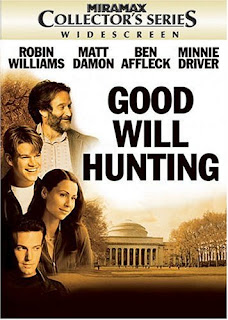 If the classroom education is the same—there are both brilliant teachers and worthless burnouts at both places—then why do community colleges have such a bad reputation? I will never forget the depiction of Bunker Hill Community College in Good Will Hunting. Despite Robin Williams' lively antics as Dr. Maguire, professor of psychology at BHCC, the students in his dumpy classroom slump in their seats, twirl their hair, and contribute zombie-like grunts to discussion. Compare that picture to the MIT students, willing to attempt difficult mathematical challenges their professor leaves on a hallway chalkboard for fun. They sit at the edge of their seats, their classroom as brightly lit as their minds, competing for their professor's attention, applauding his performance at the end of class.
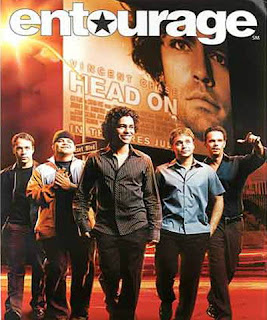 I am also reminded of the constant ribbing Eric, "E," of Entourage gets whenever he mentions that he at least attempted a 4-year degree. On one episode, the boys are at a showing of Gary Busey's art. After Eric corrects Johnny Drama's bad "interpretation" of a piece of sculpture, Drama gets defensive. Eric explains his limited expertise by saying, "I took art history in college." Drama retorts, "Community college, loser."
So is the rotten reputation that community colleges have deserved? Do they offer the McDonald's Quarter Pounder equivalent of education while pricey 4-year schools serve up filet mignon instruction?
I've been teaching long enough to know that the additional money my alma mater charged wasn't going toward better classrooms or teacher salaries. In one building, for example, I always checked the seat before sitting down. The roof leaked, and I could expect a puddle. When I applied for graduate school at the same institution, I had to interview with one of the faculty who taught in the program. I remember her shock when she learned that I made as much money as she did. That I taught 5 classes to her 3 and had 25 students per section to her 7 - 15 didn't temper her disapproval.
The differences in price allow the four-year college students more frequent and higher profile guest speakers, opportunities to watch and participate in sports, free movies on weekend evenings, museums and performing arts centers, and health services. As an undergrad, I attended lectures by James Dickey and Maya Angelou; here, we get no-name poets with print runs of 3,000 copies. If someone needs a Tylenol or bandaid at my community college, she can't walk to the Health Center for an evaluation by a real nurse or doctor. Instead, she'll have to pay the overpriced charge for a two-pill package at the bookstore or wrap toilet paper around the wound.
So differences in price contribute to differences in extracurricular opportunities or fringe benefits, not necessarily differences in the quality of instruction. So is the community college a savory—whoops, savvy—financial move, or is it where where we feed those with less discerning intellectual palates?
I don't think that community college students are stupider, that's for sure. We do get people, as a result of the "open door" policy [anyone with a high school diploma or GED has the ticket to enter], who do not have the IQ to handle the work, and no amount of remediation will help. But that's also true of universities who admit intellectually unqualified football players and drugged out children of rich alumni. Many students in my classes are just as capable of handling the work as, say, I was, and if our research folks aren't finagling the numbers, we have proof: our graduates do better their junior year [as evidenced by their GPAs] at the university than the "native" students who started there as freshmen. I have met many talented students here, some of whom are more brilliant writers, better artists, and deeper thinkers than I. They could have handled classes at an ivy league school—if they had gone to one.
I see one difference between community college and university students. Many community college students are not intellectually inferior; they are instead time management dumb. They are the people who couldn't get it together to register for their SATs, or study for them, or take them on the scheduled Saturday, or take them a second time to raise their score. They neglected to request applications to schools that made admissions decisions months in advance of the start of a new academic year. They never bothered to fill out the necessary financial aid forms. And even if they did get accepted somewhere prestigious and were awarded a scholarship, they self-sabotaged themselves, mismanaging time with a boy/girlfriend resulting in a pregnancy that caused them to decline the university offer to raise a child.
Maybe their life experiences contributed to such low self-esteem that they didn't think they deserved a chance at a more prestigious institution than the local cc. Maybe they didn't have family models who "knew the ropes" and could help them through the labyrinth of paperwork and deadlines. Whatever the obstacle, they wasted those precious months of their senior year at high school when they needed to get envelopes in the mail. Their time management stupidity has forced them to attend an institution that will accept them, arrange a short-term loan, and register them all on the same day, if, of course, they have the stamina to wait in lines. If they have postponed a return to school, the community college allows them to continue their education close to the job that they now must work to pay the bills.
Community college students do get their money's worth. They get the same great instruction at a place willing to work with their time-management problems. They get their "beef" [a McDonald's Quarter Pounder is a damn fine thing to eat], missing out on the filet mignon because they neglected to make a reservation at the "restaurant" that serves it.
And what about me? Was I a damn fool to spend all of that money on tuition to a private school? No, I don't believe so. The smaller classes meant that faculty looked out for me and my intellectual development. They were asking me my sophomore year where I planned to attend graduate school and offering to write letters of recommendation. They had a real interest in me and my friends, one that I wish I could have in my own students. But there are just too many of them, as well as too many state guidelines I have to meet, too many state or department competency tests I have to prepare the students for, that I can't offer quality time for them as individuals. They get only my and my colleague's quality instruction in the classroom, not the "fine dining" experience a 4-year school can offer.
So, yes, you do get what you pay for.
I have always been a big believer in "you get what you pay for." But is this true concerning higher education? I went to an expensive, private liberal arts college. But did I get a better education there than I would have if I had attended the local community college, which today charges $67 per credit hour, or about $1,600 for a fall and spring semester combined? My undergraduate education was way more expensive than what the community college or state university was charging at the time, but did I get way more learning?
Immediately after graduation, I had the opportunity to look closely at the schooling option I hadn't chosen. I went to work at the local community college, which employs me still. When I first arrived here, I was amazed at the brilliance of the teachers. I could have taken much cheaper classes with caring, creative, smart people my first two years if I hadn't dismissed the place as Grade 13!
Sure, some of the faculty here are worthless burnouts, but they are a very small minority, and we had them at the expensive school too. For example, my senior year as an undergrad I took a course on Renaissance art. I knew Dr. Lemon's reputation: everyone thought he was a snooze-o-rama. But this was Renaissance art: Michelangelo, Da Vinci, Raphael. Course material would still be great to study, or so I believed. Oh, was I wrong! Dr. Lemon read dusty, yellowed lecture notes—"jokes" penciled in the margins—and put me to sleep in the dark room lit only by the slide projector. If he's still teaching, I bet students skewer him on RateMyProfessor.
If the classroom education is the same—there are both brilliant teachers and worthless burnouts at both places—then why do community colleges have such a bad reputation? I will never forget the depiction of Bunker Hill Community College in Good Will Hunting. Despite Robin Williams' lively antics as Dr. Maguire, professor of psychology at BHCC, the students in his dumpy classroom slump in their seats, twirl their hair, and contribute zombie-like grunts to discussion. Compare that picture to the MIT students, willing to attempt difficult mathematical challenges their professor leaves on a hallway chalkboard for fun. They sit at the edge of their seats, their classroom as brightly lit as their minds, competing for their professor's attention, applauding his performance at the end of class.I am also reminded of the constant ribbing Eric, "E," of Entourage gets whenever he mentions that he at least attempted a 4-year degree. On one episode, the boys are at a showing of Gary Busey's art. After Eric corrects Johnny Drama's bad "interpretation" of a piece of sculpture, Drama gets defensive. Eric explains his limited expertise by saying, "I took art history in college." Drama retorts, "Community college, loser."So is the rotten reputation that community colleges have deserved? Do they offer the McDonald's Quarter Pounder equivalent of education while pricey 4-year schools serve up filet mignon instruction?
I've been teaching long enough to know that the additional money my alma mater charged wasn't going toward better classrooms or teacher salaries. In one building, for example, I always checked the seat before sitting down. The roof leaked, and I could expect a puddle. When I applied for graduate school at the same institution, I had to interview with one of the faculty who taught in the program. I remember her shock when she learned that I made as much money as she did. That I taught 5 classes to her 3 and had 25 students per section to her 7 - 15 didn't temper her disapproval.
The differences in price allow the four-year college students more frequent and higher profile guest speakers, opportunities to watch and participate in sports, free movies on weekend evenings, museums and performing arts centers, and health services. As an undergrad, I attended lectures by James Dickey and Maya Angelou; here, we get no-name poets with print runs of 3,000 copies. If someone needs a Tylenol or bandaid at my community college, she can't walk to the Health Center for an evaluation by a real nurse or doctor. Instead, she'll have to pay the overpriced charge for a two-pill package at the bookstore or wrap toilet paper around the wound.
So differences in price contribute to differences in extracurricular opportunities or fringe benefits, not necessarily differences in the quality of instruction. So is the community college a savory—whoops, savvy—financial move, or is it where where we feed those with less discerning intellectual palates?
I don't think that community college students are stupider, that's for sure. We do get people, as a result of the "open door" policy [anyone with a high school diploma or GED has the ticket to enter], who do not have the IQ to handle the work, and no amount of remediation will help. But that's also true of universities who admit intellectually unqualified football players and drugged out children of rich alumni. Many students in my classes are just as capable of handling the work as, say, I was, and if our research folks aren't finagling the numbers, we have proof: our graduates do better their junior year [as evidenced by their GPAs] at the university than the "native" students who started there as freshmen. I have met many talented students here, some of whom are more brilliant writers, better artists, and deeper thinkers than I. They could have handled classes at an ivy league school—if they had gone to one.
I see one difference between community college and university students. Many community college students are not intellectually inferior; they are instead time management dumb. They are the people who couldn't get it together to register for their SATs, or study for them, or take them on the scheduled Saturday, or take them a second time to raise their score. They neglected to request applications to schools that made admissions decisions months in advance of the start of a new academic year. They never bothered to fill out the necessary financial aid forms. And even if they did get accepted somewhere prestigious and were awarded a scholarship, they self-sabotaged themselves, mismanaging time with a boy/girlfriend resulting in a pregnancy that caused them to decline the university offer to raise a child.
Maybe their life experiences contributed to such low self-esteem that they didn't think they deserved a chance at a more prestigious institution than the local cc. Maybe they didn't have family models who "knew the ropes" and could help them through the labyrinth of paperwork and deadlines. Whatever the obstacle, they wasted those precious months of their senior year at high school when they needed to get envelopes in the mail. Their time management stupidity has forced them to attend an institution that will accept them, arrange a short-term loan, and register them all on the same day, if, of course, they have the stamina to wait in lines. If they have postponed a return to school, the community college allows them to continue their education close to the job that they now must work to pay the bills.
Community college students do get their money's worth. They get the same great instruction at a place willing to work with their time-management problems. They get their "beef" [a McDonald's Quarter Pounder is a damn fine thing to eat], missing out on the filet mignon because they neglected to make a reservation at the "restaurant" that serves it.
And what about me? Was I a damn fool to spend all of that money on tuition to a private school? No, I don't believe so. The smaller classes meant that faculty looked out for me and my intellectual development. They were asking me my sophomore year where I planned to attend graduate school and offering to write letters of recommendation. They had a real interest in me and my friends, one that I wish I could have in my own students. But there are just too many of them, as well as too many state guidelines I have to meet, too many state or department competency tests I have to prepare the students for, that I can't offer quality time for them as individuals. They get only my and my colleague's quality instruction in the classroom, not the "fine dining" experience a 4-year school can offer.
So, yes, you do get what you pay for.
Tuesday, May 23, 2006
Did I Learn Anything?
One blog I visit every weekday during lunch is Confessions of a Community College Dean. The author provides entertaining, work-related posts and has quite a large following, which makes the "comments" section a worthwhile diversion. Last week he spent one day complaining about the foreign language requirement at his school and the very next day arguing that typical college-level math classes were just as worthless for many AA-degree seekers. Those two posts—plus discovering a copy of my undergraduate transcript here in my office—made me think about my freshman year in college. I have concluded that although I must have learned a lot [I do remember reading, writing, taking exams, feeling great anxiety, etc.], I don't remember much of the content of the classes I took.
What I Remember Best, Fall Term, 1981
Elementary French: I can still picture the lovely silver-haired madame puffing on a cigarette as she stood in the door frame, blowing smoke into the empty hallway, while she proctored our exams or waited for us to scribble answers in our workbooks. I thought she was the epitome of cool and worried that I personally disappointed her whenever I failed to score a 100 on an assignment. The class was too easy for me—I should have taken Intermediate French—but the one section that was offered conflicted with Conversational Russian. The professor of that class, Colonel Ed, an authoritative ex-Marine, was also my academic advisor. He pressured me to take Russian every semester until he retired two years later.
Current knowledge of French = miniscule
Crush on teacher = immense
Precalculus Mathematics: Whenever my classmates and I were especially annoying in our mathematical ignorance, our nerdy professor turned to the blackboard and her scribbled formulae, lamenting that numbers were her only real friends. I remember that the first half of Precalculus was a repeat of high school math, so I quit attending regularly, as I was easily making As on exams. When the class began new material, I was not there to notice and never able to catch up. Thankfully, half a semester of As and half a semester of Fs averaged to a C+ for the course and the end of my math torture.
I would not know where to begin if someone put a first-day problem from Precalculus in front of me today. I do know that if I had a copy of the textbook, I could figure the problem out. As a student, I never read math textbooks. [Some of my undergrad professors would say I overwrote that last sentence, that math made it wordy.] But having taught myself over the years a number of new things without formal classroom training, I have learned that looking over printed explanations can usually provide the answer. I am a big fan of the For Dummies series.
Current knowledge of precalculus = zero
Likelihood I could figure it out, if motivated = high
Likelihood I would be motivated to figure it out = low
Conversational Russian: I still have a handful of ever-handy phrases—"Hello, how are you?" "Good." "Goodbye." "Do you speak Russian?" "Yes, I speak Russian." "Give me some black bread, please." "Thank you." If I were to listen all the way through "Katyusha," a Russian wartime song, I could probably sing it accurately at a karaoke bar. I remember having to sing "Katyusha" at least once every other class for five semesters.
Current knowledge of Russian = laughable
Likelihood I would embarrass myself at a karaoke bar = high
Essentials World Civilizations: I remember that I made the mistake of writing "The ancient Egyptians had a fetish about death" on an essay exam, and my professor circling fetish and snidely commenting that I needed to consult a dictionary to use the word correctly. I immediately understood that college professors, unlike high school teachers, wanted papers that had more than correctly spelled words. The professor for this class was a brilliant lecturer—even though PowerPoint wasn't invented, even though all he had was a collection of brightly colored flip maps at the front of the room—so I made the mistake of taking him again for Winter Term, one month of intensive study in a single class.
Current knowledge of ancient cultures = high [reinforced, though, by graduate work and self-study]
Opportunities to use fetish correctly in daily speech = few, alas
What I Remember Best, Winter Term, 1982
The Russian Revolution: Mesmerized by the melodic voice and scope of knowledge of Dr. Eaton, I took a senior-level history seminar winter term of my freshman year. I remember that I had to get his written permission to register. Dr. Eaton may have tried to dissuade me but signed the form in the end, despite the evidence that I didn't know how to use fetish correctly. Instead of a superficial textbook that covered all of human history as we had used in Essentials World Civilizations, I was assigned primary sources, like the writings of Trotsky and Lenin, or detailed historical analyses by highbrow scholars. I was in way over my head, afraid to say anything in a class full of anarchist history majors, afraid to ask for help after class and risk appearing stupid. We had a major research paper as our only grade. Of course, I had never written a research paper before, further proof of the poor public education in the South. I bought a handbook and puzzled out footnotes and the bibliography. Dr. Eaton gave me a generous B-, perhaps out of guilt from having signed the permission form in the first place. I don't even remember the subject of that 20-page paper.
Current knowledge of the Russian Revolution = too painful to determine
Inspiration after this class to become a history major = low
What I Remember Best, Spring Term, 1982
Freshman Rhetoric & Composition: I remember staring at the classroom door, waiting for the department secretary to poke her head in. She came often to say that our professor was blowing us off again but to begin the new essay even though we had no guidelines. "He says to tell you to read the handbook if you have any questions!" she would advise. Dr. Phillips was the resident Southern literature expert, so he found the one composition class he taught—us—a real drag, not really worth his time. To be perfectly honest, though, we didn't find the course worth our time either. The college mandated that the bad freshman writers take composition in the fall. We knew that our spring term placement meant that the college considered us the good freshman writers. We thought we already knew everything and wondered why no one had offered us a book contract yet.
Current knowledge of essay writing = high, no thanks to Dr. Phillips
Frequency of employing the techniques of Dr. Phillips in my own composition classes = never
World Religions: Far Eastern: Any chance that I would return to regular worship at the Methodist church ended after a semester of lively discussions with the professor of this class, the Dean of the Chapel. Finally, I thought, religions that made sense! Religions that offered logical explanations for the existence of suffering and imperfection! I loved the idea that we have many lives to fix mistakes and get things right, instead of being tossed into hell after sixty or so short years. As a poor college student struggling to pay for things, I loved the idea that all suffering is the result of wanting what we cannot have, and that we should try to stop the desire, not exhaust ourselves trying to satisfy it.
Current knowledge of far Eastern religions = high
Mom's worry that I would join a cult while taking the class = high
Elementary Russian:A typical class* went like this:
Opportunities to ask a Russian speaker for black bread = zero
Elementary Spanish: To explain my third language in a single year, let me say that I fancied myself a writer/world traveler after college graduation and began the requirements [soon abandoned] of a foreign language major. I remember best that the professor for this class insisted that we clock in and out of the language lab, amassing a specific number of hours per week there. During one trip to a carrel with headphones, I discovered a tape with a recording of "Guantanamara," a famous Cuban song. Every future hour in the lab I spent listening exclusively to this song: finding the place on the tape, listening, rewinding, listening again, rewinding—you get the picture. If the lab staff heard the song escaping from my headphones every day I was there, no one confronted me to get on task.
Current knowledge of Spanish = un pocotito
Ability to pretend that I am paying attention in department meetings while I am in fact singing "Guantanamara" in my head = off the charts
Humanities: Classic to Romantic: I remember many things about the art, literature, and philosophy of the Classic and Romantic movements. I made many good friends in this class and spent all of my free time on campus discussing/debating the ideas and works we explored. This class ruled my spring semester. My strongest memory, however, is the frustration trying to please the two professors who taught the course. The first month, we listened to the philosophy professor [who paced on the conference table around which we sat]; then we took an essay exam which he graded. Everyone found it impossible to answer all of the questions in the time we were given. When Professor No. 1 returned the essays, he chastised us for not completing all of the exam. We cried that there was no way to write good essays for all of the questions. He countered that he didn't want essays, just answers. We sucked up our Cs and spent the next month listening to the literature professor who made up the second half of the team. At the end of his turn, we took our second exam. This time we didn't worry about titles, engaging introductions, carefully crafted thesis statements and the like; we just wrote answers—to all of the questions. When Professor No. 2 returned this set of exams, he chastised us for forgetting everything our composition classes had taught us about good writing. But Professor No. 1 said the answer, not the writing, was important, we cried. We could not convince the literature professor that we felt betrayed by the team-teaching experience and sucked up more Cs. For the final exam, we demanded that they make their expectations clear before we wrote that last time. I ended up with a B in the class, but I doubt that they even opened the blue books, basing their grades on some holistic evaluation of our overall performance, so they could watch TV.
Current knowledge of Classic/Romantic movements = high
Grade I should have received = A+
Looking back on that first year as an undergrad, I realize that it didn't really matter what I took. Having to weigh skipping a class against all the money tuition cost, having to be more responsible than any high school class ever required, having to please people who expected more of me than anyone else ever had, operating within and testing new boundaries, learning to please different personalities—those were the real lessons.
What I Remember Best, Fall Term, 1981
Elementary French: I can still picture the lovely silver-haired madame puffing on a cigarette as she stood in the door frame, blowing smoke into the empty hallway, while she proctored our exams or waited for us to scribble answers in our workbooks. I thought she was the epitome of cool and worried that I personally disappointed her whenever I failed to score a 100 on an assignment. The class was too easy for me—I should have taken Intermediate French—but the one section that was offered conflicted with Conversational Russian. The professor of that class, Colonel Ed, an authoritative ex-Marine, was also my academic advisor. He pressured me to take Russian every semester until he retired two years later.
Current knowledge of French = miniscule
Crush on teacher = immense
Precalculus Mathematics: Whenever my classmates and I were especially annoying in our mathematical ignorance, our nerdy professor turned to the blackboard and her scribbled formulae, lamenting that numbers were her only real friends. I remember that the first half of Precalculus was a repeat of high school math, so I quit attending regularly, as I was easily making As on exams. When the class began new material, I was not there to notice and never able to catch up. Thankfully, half a semester of As and half a semester of Fs averaged to a C+ for the course and the end of my math torture.
I would not know where to begin if someone put a first-day problem from Precalculus in front of me today. I do know that if I had a copy of the textbook, I could figure the problem out. As a student, I never read math textbooks. [Some of my undergrad professors would say I overwrote that last sentence, that math made it wordy.] But having taught myself over the years a number of new things without formal classroom training, I have learned that looking over printed explanations can usually provide the answer. I am a big fan of the For Dummies series.
Current knowledge of precalculus = zero
Likelihood I could figure it out, if motivated = high
Likelihood I would be motivated to figure it out = low
Conversational Russian: I still have a handful of ever-handy phrases—"Hello, how are you?" "Good." "Goodbye." "Do you speak Russian?" "Yes, I speak Russian." "Give me some black bread, please." "Thank you." If I were to listen all the way through "Katyusha," a Russian wartime song, I could probably sing it accurately at a karaoke bar. I remember having to sing "Katyusha" at least once every other class for five semesters.
Current knowledge of Russian = laughable
Likelihood I would embarrass myself at a karaoke bar = high
Essentials World Civilizations: I remember that I made the mistake of writing "The ancient Egyptians had a fetish about death" on an essay exam, and my professor circling fetish and snidely commenting that I needed to consult a dictionary to use the word correctly. I immediately understood that college professors, unlike high school teachers, wanted papers that had more than correctly spelled words. The professor for this class was a brilliant lecturer—even though PowerPoint wasn't invented, even though all he had was a collection of brightly colored flip maps at the front of the room—so I made the mistake of taking him again for Winter Term, one month of intensive study in a single class.
Current knowledge of ancient cultures = high [reinforced, though, by graduate work and self-study]
Opportunities to use fetish correctly in daily speech = few, alas
What I Remember Best, Winter Term, 1982
The Russian Revolution: Mesmerized by the melodic voice and scope of knowledge of Dr. Eaton, I took a senior-level history seminar winter term of my freshman year. I remember that I had to get his written permission to register. Dr. Eaton may have tried to dissuade me but signed the form in the end, despite the evidence that I didn't know how to use fetish correctly. Instead of a superficial textbook that covered all of human history as we had used in Essentials World Civilizations, I was assigned primary sources, like the writings of Trotsky and Lenin, or detailed historical analyses by highbrow scholars. I was in way over my head, afraid to say anything in a class full of anarchist history majors, afraid to ask for help after class and risk appearing stupid. We had a major research paper as our only grade. Of course, I had never written a research paper before, further proof of the poor public education in the South. I bought a handbook and puzzled out footnotes and the bibliography. Dr. Eaton gave me a generous B-, perhaps out of guilt from having signed the permission form in the first place. I don't even remember the subject of that 20-page paper.
Current knowledge of the Russian Revolution = too painful to determine
Inspiration after this class to become a history major = low
What I Remember Best, Spring Term, 1982
Freshman Rhetoric & Composition: I remember staring at the classroom door, waiting for the department secretary to poke her head in. She came often to say that our professor was blowing us off again but to begin the new essay even though we had no guidelines. "He says to tell you to read the handbook if you have any questions!" she would advise. Dr. Phillips was the resident Southern literature expert, so he found the one composition class he taught—us—a real drag, not really worth his time. To be perfectly honest, though, we didn't find the course worth our time either. The college mandated that the bad freshman writers take composition in the fall. We knew that our spring term placement meant that the college considered us the good freshman writers. We thought we already knew everything and wondered why no one had offered us a book contract yet.
Current knowledge of essay writing = high, no thanks to Dr. Phillips
Frequency of employing the techniques of Dr. Phillips in my own composition classes = never
World Religions: Far Eastern: Any chance that I would return to regular worship at the Methodist church ended after a semester of lively discussions with the professor of this class, the Dean of the Chapel. Finally, I thought, religions that made sense! Religions that offered logical explanations for the existence of suffering and imperfection! I loved the idea that we have many lives to fix mistakes and get things right, instead of being tossed into hell after sixty or so short years. As a poor college student struggling to pay for things, I loved the idea that all suffering is the result of wanting what we cannot have, and that we should try to stop the desire, not exhaust ourselves trying to satisfy it.
Current knowledge of far Eastern religions = high
Mom's worry that I would join a cult while taking the class = high
Elementary Russian:A typical class* went like this:
Colonel Ed: Hello, How are you?Current knowledge of Russian = greater than current knowledge of precalculus
A student: Good, thank you.
Colonel Ed: Do you speak Russian?
A different student: Yes, I speak Russian.
Colonel Ed: Would you like some black bread?
A third student: Yes, give me some black bread, please. Thank you.
Colonel Ed: [hitting play button on tape recorder] Okay, let's sing "Katyusha."
Students: [in unison] Расцветали яблони и груши,
Поплыли туманы над рекой ...
Colonel Ed: Goodbye!
Students: [in unison] Goodbye!
*translated from Russian
Opportunities to ask a Russian speaker for black bread = zero
Elementary Spanish: To explain my third language in a single year, let me say that I fancied myself a writer/world traveler after college graduation and began the requirements [soon abandoned] of a foreign language major. I remember best that the professor for this class insisted that we clock in and out of the language lab, amassing a specific number of hours per week there. During one trip to a carrel with headphones, I discovered a tape with a recording of "Guantanamara," a famous Cuban song. Every future hour in the lab I spent listening exclusively to this song: finding the place on the tape, listening, rewinding, listening again, rewinding—you get the picture. If the lab staff heard the song escaping from my headphones every day I was there, no one confronted me to get on task.
Current knowledge of Spanish = un pocotito
Ability to pretend that I am paying attention in department meetings while I am in fact singing "Guantanamara" in my head = off the charts
Humanities: Classic to Romantic: I remember many things about the art, literature, and philosophy of the Classic and Romantic movements. I made many good friends in this class and spent all of my free time on campus discussing/debating the ideas and works we explored. This class ruled my spring semester. My strongest memory, however, is the frustration trying to please the two professors who taught the course. The first month, we listened to the philosophy professor [who paced on the conference table around which we sat]; then we took an essay exam which he graded. Everyone found it impossible to answer all of the questions in the time we were given. When Professor No. 1 returned the essays, he chastised us for not completing all of the exam. We cried that there was no way to write good essays for all of the questions. He countered that he didn't want essays, just answers. We sucked up our Cs and spent the next month listening to the literature professor who made up the second half of the team. At the end of his turn, we took our second exam. This time we didn't worry about titles, engaging introductions, carefully crafted thesis statements and the like; we just wrote answers—to all of the questions. When Professor No. 2 returned this set of exams, he chastised us for forgetting everything our composition classes had taught us about good writing. But Professor No. 1 said the answer, not the writing, was important, we cried. We could not convince the literature professor that we felt betrayed by the team-teaching experience and sucked up more Cs. For the final exam, we demanded that they make their expectations clear before we wrote that last time. I ended up with a B in the class, but I doubt that they even opened the blue books, basing their grades on some holistic evaluation of our overall performance, so they could watch TV.
Current knowledge of Classic/Romantic movements = high
Grade I should have received = A+
Looking back on that first year as an undergrad, I realize that it didn't really matter what I took. Having to weigh skipping a class against all the money tuition cost, having to be more responsible than any high school class ever required, having to please people who expected more of me than anyone else ever had, operating within and testing new boundaries, learning to please different personalities—those were the real lessons.
Thursday, November 17, 2005
A Razor and a Can of Barbasol
Every spring of my undergraduate education, the Dean of the Chapel invited a Zen abbess to campus. She taught meditation in the mornings, guest lectured in all kinds of classes, and took a group of Buddhist wannabes on a weekend retreat. She was of Asian descent but spoke English without an accent; she wore floor-length ochre robes with sandals. My small, expensive alma mater was almost completely homogeneous at the time [diversity did not yet factor in admissions], so this woman stood out among all the 18 to 21-year-old preppy white kids. My senior year, she arrived bald. The Abbess was a warm, open, unintimidating person, so someone asked, "Why did you shave your head?"
The Abbess explained that she saw her reflection in a mirror one day and thought to herself how much she liked her hair. She then realized that she harbored an attachment to the coif, and since the whole point of Buddhism is lack of attachment, she immediately removed the locks with a razor. Her explanation has stuck in my mind all of these years. I admire that level of discipline.
 I have tremendous respect for people, especially women, willing to do as the Abbess did. Two recent hair removal experiences occurred on The Amazing Race. During Race 5, Brandon and Nicole, the models, chose a Fast Forward in India which required they both shave their heads. The race is a game, right? Contestants should do whatever they have to do to win, right? These two Christians, however, couldn't imagine life without their precious tresses and chose to return to the Roadblock and complete it instead, landing them in last place. Poor Jesus, he used to have people willing to risk getting thrown to the lions; now he gets dimwits incapable of facing a head scraping with a straight-edge razor. Oh, I cried when Phil Keoghan, the host, explained that it was a non-elimination leg of the race, for I loathed Brandon and Nicole. During the last episode, I will never forget Brandon trying to inspire Nicole to hike her ass up Lookout Mountain in Calgary by exclaiming that she should imagine Christ the Savior, his arms outstretched, waiting for her at the top. Yeah, I'm sure Jesus cared whether those two assholes won a million dollars.
 Joyce, one of the two winners of Race 7 [Uchenna, her husband, already had a shiny pate], impressed me for setting aside her "attachments" and, for the sake of her team's success, allowing the loss of her long, beautiful hair. She obviously understood how change is necessary for advancement—whether that advancement is winning the next leg of a reality TV show race or gaining a better understanding of the human condition. Even if she and Uchenna hadn't won, the strength and wisdom gained from the shaving experience would have followed her through the rest of her life.
 Melissa Etheridge is another example. Her bald Grammy appearance last year indicated a willingness to embrace the life changes that had occurred from breast cancer.
I too have faced the disposable Daisy and a can of Barbasol. When I learned that my cancer treatment would include chemo, I got my shoulder-length hair cut pixie short. Still, it seemed too long for the inevitable shedding, so I let Elizabeth use her horse clippers to buzz it to half an inch. Even that short length caused a mess in the shower once the hair loss began, so I finally foamed up what was left and shaved myself bald. I believed that taking some control during treatment when I had little say helped me avoid getting really depressed. One of my doctors, if I ever resisted his many instructions or balked at the time of an inconvenient appointment, would ask, "What? You're too busy to let me save your life?"
How many times have I sat waiting for a haircut, listening to the inane complaints around me? "Do you see this?" a woman once asked the receptionist, holding a handful of ends. "Do you see how they stick out?" Get over it, lady! One stylist wanted to know the name of the idiot who had cut my hair so unevenly. It was uneven? Gosh, with strands four inches long, I hadn't even noticed that one side was a sixteenth of an inch off. I can sit in a salon chair now and say to the stylist—even if he/she is a complete stranger—"Whatever you want to do." It's just hair. It grows out; it grows back. The perfect symbol for life, hair is constantly changing and only a very foolish person would obsess over good vs. bad hair days.
The hairstyle doesn't make someone look old; age does. The hairstyle doesn't make someone look fat, thin, tall, or short; weight and height do. Attempting to affix an ex-moment of life with a combover, a glaze of hairspray, or a dye job seems incredibly silly to me and terrible preparation for a future that has a good chance of holding inevitable hair loss.
The Abbess explained that she saw her reflection in a mirror one day and thought to herself how much she liked her hair. She then realized that she harbored an attachment to the coif, and since the whole point of Buddhism is lack of attachment, she immediately removed the locks with a razor. Her explanation has stuck in my mind all of these years. I admire that level of discipline.
 I have tremendous respect for people, especially women, willing to do as the Abbess did. Two recent hair removal experiences occurred on The Amazing Race. During Race 5, Brandon and Nicole, the models, chose a Fast Forward in India which required they both shave their heads. The race is a game, right? Contestants should do whatever they have to do to win, right? These two Christians, however, couldn't imagine life without their precious tresses and chose to return to the Roadblock and complete it instead, landing them in last place. Poor Jesus, he used to have people willing to risk getting thrown to the lions; now he gets dimwits incapable of facing a head scraping with a straight-edge razor. Oh, I cried when Phil Keoghan, the host, explained that it was a non-elimination leg of the race, for I loathed Brandon and Nicole. During the last episode, I will never forget Brandon trying to inspire Nicole to hike her ass up Lookout Mountain in Calgary by exclaiming that she should imagine Christ the Savior, his arms outstretched, waiting for her at the top. Yeah, I'm sure Jesus cared whether those two assholes won a million dollars.
 Joyce, one of the two winners of Race 7 [Uchenna, her husband, already had a shiny pate], impressed me for setting aside her "attachments" and, for the sake of her team's success, allowing the loss of her long, beautiful hair. She obviously understood how change is necessary for advancement—whether that advancement is winning the next leg of a reality TV show race or gaining a better understanding of the human condition. Even if she and Uchenna hadn't won, the strength and wisdom gained from the shaving experience would have followed her through the rest of her life.
 Melissa Etheridge is another example. Her bald Grammy appearance last year indicated a willingness to embrace the life changes that had occurred from breast cancer.
I too have faced the disposable Daisy and a can of Barbasol. When I learned that my cancer treatment would include chemo, I got my shoulder-length hair cut pixie short. Still, it seemed too long for the inevitable shedding, so I let Elizabeth use her horse clippers to buzz it to half an inch. Even that short length caused a mess in the shower once the hair loss began, so I finally foamed up what was left and shaved myself bald. I believed that taking some control during treatment when I had little say helped me avoid getting really depressed. One of my doctors, if I ever resisted his many instructions or balked at the time of an inconvenient appointment, would ask, "What? You're too busy to let me save your life?"
How many times have I sat waiting for a haircut, listening to the inane complaints around me? "Do you see this?" a woman once asked the receptionist, holding a handful of ends. "Do you see how they stick out?" Get over it, lady! One stylist wanted to know the name of the idiot who had cut my hair so unevenly. It was uneven? Gosh, with strands four inches long, I hadn't even noticed that one side was a sixteenth of an inch off. I can sit in a salon chair now and say to the stylist—even if he/she is a complete stranger—"Whatever you want to do." It's just hair. It grows out; it grows back. The perfect symbol for life, hair is constantly changing and only a very foolish person would obsess over good vs. bad hair days.
The hairstyle doesn't make someone look old; age does. The hairstyle doesn't make someone look fat, thin, tall, or short; weight and height do. Attempting to affix an ex-moment of life with a combover, a glaze of hairspray, or a dye job seems incredibly silly to me and terrible preparation for a future that has a good chance of holding inevitable hair loss.
Wednesday, September 28, 2005
Decisions, Decisions ...
I have a colleague who must be 15 years my junior, at least. When the dean first hired her part-time to work in the language lab, she had face piercings, jet black hair, and blue fingernails. But she was enthusiastic, fun, and very smart, so a senior faculty member took her aside and explained that if she wanted full-time employment, she needed to tone down the "Goth." Libby accepted the constructive criticism and began dressing the part of a professional; now she works on a "full-time temporary" contract, waiting for a tenure-track position to open.
Although I was never as counterculture as Libby, I keep finding out that the early-30s Sparky shared many of Libby's current interests. For example, Libby still collects comic books, as I did at her age, a hobby I have since abandoned. She enjoys alternative bands, as I did until my bands matured and started worrying as much about making lots of money as they did about good music. So I wasn't surprised to find this email in my inbox: The problem is that I'm not a Patricia Highsmith fan; I'm a lesbian fiction fan. Many years ago, before the Internet and Amazon.com, I belonged to the Quality Paperback Book Club and subscribed to a collection called The Triangle Classics—pink triangle, mind you. There were eight works in the original offering, and QPB kept adding one or two more every six months or so. I felt duty bound to understand my "tribe" and bought them all. I ordered The Price of Salt, a novel Patricia Highsmith originally published under the pseudonym Clare Morgan, when it became available, but since I wasn't familiar with her works like Strangers on a Train or The Talented Mr. Ripley, the novel sat on a shelf for years before I ever picked it up to read. It is an amazingly good book, suspenseful without murder [Highsmith's typical hook] and revolutionary for the early 1950s, as the two women involved save their relationship from the many challenges that confront them. Instead of getting locked up in an insane asylum, committing suicide, or renouncing lesbianism to date men, they live their lives as a committed couple.
 Somehow during my aimless wanderings at Amazon, I was recommended Highsmith, A Romance of the 1950s, an account of the short relationship Highsmith had with Marijane Meaker. The young Highsmith was a vibrant human being, full of promise and talent—not only for writing but also love and growth. I found myself admiring her self-assuredness and ability to take risks. The biography did an excellent job capturing the exuberant life of two young writers in love. That Meaker biography inspired my purchase of Beautiful Shadow, Andrew Wilson's full look at Highsmith's life, from birth to death. That one I couldn't finish. As Highsmith aged and life disappointed her, she became exactly the type of person anyone would fear to become: bitter, self-deluded, an emotional, chain-smoking wreck. [All of her life, though, she was a dedicated journal keeper and learning that factoid inspired me to begin blogging last November.] I quit reading at page 327 [A stolen tabletop card announcing the introduction of frappuccino "lights" at the Barnes & Noble cafe still marks the spot]. I did eventually try two of her crime novels, Strangers on a Train and The Blunderer, but they were both so creepy, I put them down. Maybe if the characters had been women I would have finished, but men behaving in the worst manner possible to imagine just confirmed for me that I prefer female protagonists.
 So the decision: How should I respond to Libby's email? I am not out at work and, to be perfectly honest, don't want to be. All of my colleagues would say that I am a very private person, that they know very little about my personal life. I certainly don't want the one area they do discuss to be my sexuality. So I found myself severely editing my response to Libby:
Although I was never as counterculture as Libby, I keep finding out that the early-30s Sparky shared many of Libby's current interests. For example, Libby still collects comic books, as I did at her age, a hobby I have since abandoned. She enjoys alternative bands, as I did until my bands matured and started worrying as much about making lots of money as they did about good music. So I wasn't surprised to find this email in my inbox:
From: libby.daniels@_____cc.edu
To: sparky.lightbulb@_____cc.edu
Sent: Tuesday, September 27, 2005 5:34 PM
Subject: Highsmith rocks my world!
Hi, Sparky!
I stopped by Elizabeth's office this afternoon, and she revealed that you're a Highsmith addict! What luck! I've finished 7 of her books so far, and I'm waiting on Amazon to deliver #8 and #9. We have to get together to discuss our favorites!
Your fellow Highsmith junkie,
Libby
The problem is that I'm not a Patricia Highsmith fan; I'm a lesbian fiction fan. Many years ago, before the Internet and Amazon.com, I belonged to the Quality Paperback Book Club and subscribed to a collection called The Triangle Classics—pink triangle, mind you. There were eight works in the original offering, and QPB kept adding one or two more every six months or so. I felt duty bound to understand my "tribe" and bought them all. I ordered The Price of Salt, a novel Patricia Highsmith originally published under the pseudonym Clare Morgan, when it became available, but since I wasn't familiar with her works like Strangers on a Train or The Talented Mr. Ripley, the novel sat on a shelf for years before I ever picked it up to read. It is an amazingly good book, suspenseful without murder [Highsmith's typical hook] and revolutionary for the early 1950s, as the two women involved save their relationship from the many challenges that confront them. Instead of getting locked up in an insane asylum, committing suicide, or renouncing lesbianism to date men, they live their lives as a committed couple.Somehow during my aimless wanderings at Amazon, I was recommended Highsmith, A Romance of the 1950s, an account of the short relationship Highsmith had with Marijane Meaker. The young Highsmith was a vibrant human being, full of promise and talent—not only for writing but also love and growth. I found myself admiring her self-assuredness and ability to take risks. The biography did an excellent job capturing the exuberant life of two young writers in love. That Meaker biography inspired my purchase of Beautiful Shadow, Andrew Wilson's full look at Highsmith's life, from birth to death. That one I couldn't finish. As Highsmith aged and life disappointed her, she became exactly the type of person anyone would fear to become: bitter, self-deluded, an emotional, chain-smoking wreck. [All of her life, though, she was a dedicated journal keeper and learning that factoid inspired me to begin blogging last November.] I quit reading at page 327 [A stolen tabletop card announcing the introduction of frappuccino "lights" at the Barnes & Noble cafe still marks the spot]. I did eventually try two of her crime novels, Strangers on a Train and The Blunderer, but they were both so creepy, I put them down. Maybe if the characters had been women I would have finished, but men behaving in the worst manner possible to imagine just confirmed for me that I prefer female protagonists.So the decision: How should I respond to Libby's email? I am not out at work and, to be perfectly honest, don't want to be. All of my colleagues would say that I am a very private person, that they know very little about my personal life. I certainly don't want the one area they do discuss to be my sexuality. So I found myself severely editing my response to Libby: From: sparky.lightbulb@_____cc.edu
To: libby.daniels@_____cc.edu
Sent: Wednesday, September 28, 2005 7:58 AM
Subject: Re: Highsmith rocks my world!
Libby—
I hate to disappoint, but Elizabeth misled you.Gay girl that I am,I enjoylesbian fictionauthor biographies and so have readonly The Price of SaltBeautiful Shadow. I started The Blunderer and Strangers on a Train butfound them too creepynever finished them. Tell me which of her works is your favorite, and I'll try reading her one more time. If you are interested insome girl-on-girl actionthe biography, let me know, and I'll putThe Price of Salt and a book chronicling her affair with Marijane Meakerit in your box.
Sparky
Tuesday, September 27, 2005
Florida Seasons

Bug and I were walking at the lake when an oak limb almost poked out my eye. Stepping back to avoid a twig through my cornea, I noticed that the branches of this particular tree were full of nearly mature acorns. Elementary school bulletin boards have seared acorns into my brain as the symbol for fall. Sure, my teachers also included borders made of red and orange leaves, but those had little meaning as here in Florida leaves just turn brown and fall off, sometimes not until spring. My calendar had noted the passing of the autumnal equinox last Thursday, but with weeks upon weeks of 90+ degree weather and a five-day forecast of nothing but the same, I hadn't registered a seasonal change.
People always complain that Florida doesn't have seasons. True, no chorus of maple and birch shout with color to indicate fall. No snow-spitting skies announce winter's arrival. Palms trees don't bud in ways anyone notices, and the thermometer sings 90 degrees as easily in December as it does in August. Still, a careful observer can catch the hand-off from one season to the next—it's just that Florida seasons don't paint the sentimental pictures that typically grace the front of Hallmark cards.
The honks of migrating geese might be the sound that a Northerner associates with fall. But for many years, I anticipated silent dishes asleep in the kitchen cabinets. Once the humidity began to drop in October, I could quiet my rumbling air conditioner, an old wall unit that shook the entire house when the compressor kicked on. Fall meant that the plates and bowls quit rattling their complaints from the shelves. Now that I have central air, I still wait for fall to announce its arrival by sound: pops and crunches beneath the car tires as I turn onto my oak-lined street and begin crushing the acorns that litter the road and my driveway. And I have visual cues as well. Instead of gaudy trees aflame with color, I enjoy a dose of television news with an emphasis on a map of Central Florida, no more wide angle shots that include the coast of Africa catapulting tropical waves in our direction, no more hurricanes pinwheeling in the Atlantic with projected paths through downtown Orlando.
Winter is even more subtle than fall. When I arrive home in the afternoon, I discover that the little lizards have disappeared from the front walk; hibernating, they no longer make their mad dash for cover through the now crunchy plants. I know that the temperature might actually drop into the forties when I can buy a Krispy Kreme donut and my teeth shatter the glaze into sugar shards as if I had bitten a pane of thin glass. For all other seasons of the year, Krispy Kreme donuts are slimy, slipping through my fingers with each bite, as the high humidity melts the glaze.
Spring arrives with equal parts death and birth. Florida oaks lose their leaves in the spring, a blizzard of brown that blankets the lawns, sidewalks, and streets. The dead leaves threaten to suffocate the grass that is preparing to shoot up five or more inches every week. I always spend spring break raking—sneezing and choking from the oak pollen that falls immediately after the leaves—instead of walking on the beach, the cliché. The citrus trees bloom, perfuming the still dry air, and all of the dead gray-green of winter brightens to a week or two of brilliant emerald punctuated with azeala pinks before summer heat dulls the green several shades.
Florida spring is the shortest lived of the seasons. For me, doughnuts once more whisper the arrival of summer. One morning I will catch the sugar on a Bavarian creme clinging to the pastry instead of dusting my fingers, chin, and shirt front as it has since November. Gooey powdered sugar heralds the return of the high humidity that accompanies summer. Message received, I know I will soon hear the buzzing of the first mosquito and wonder how many more D batteries I will need for the approaching hurricane season.
For me, seasons in other parts of the country are loud mouths, trumpeting their over-the-top arrival. Even though I can wear shorts during Christmas break, Florida has seasons too, with clear demarcations—just not the kind that have calendar photographs devoted to them.
Saturday, July 23, 2005
Elizabeth's Kryptonite
This morning I made the mistake of accompanying Elizabeth to Publix. Everyone has a weakness, and Elizabeth's is shopping for groceries. She promised, "This will only take half an hour. All I need is some breakfast and lunch stuff for next week." I knew better than to believe those words. I can shop an entire grocery store in fifteen minutes, from the time I cross the threshold to the moment I tell the bagger, "No thanks, I can take the cart to the car myself." Elizabeth, however, takes two hours to food shop.
Usually we make the long drive to Whole Foods together. [Post-cancer, I prefer as many organic items as possible.] That store is so small and cramped that we are hurried along by the tight aisles, teetering displays, and bumper-car mentality of the other customers. But this Saturday I didn't need much and Elizabeth wanted big, firm cherries instead of the overpriced, bruised, drippy organic ones from Whole Foods. So against my better judgment, I accompanied her to Publix. I knew as soon as we walked in that I was in trouble as the wide aisles, high ceiling, and perfect pyramids of fresh, firm fruits and vegetables called, siren-like, even to me. I thought to myself, Wow, I can buy some of these beautiful yellow plantains, some of these gorgeous sweet potatoes, and a package of plump pork chops. What a meal that would be!
But we are all born with super powers, and one of my gifts is to block the evil rays of product placement, "shopper" music, and flattering lighting. I knew that the plantains would sit on the counter until tiny flies start to buzz around them, that the sweet potatoes would turn into puddles of filthy juice in the vegetable bin of the refrigerator, and that even if I tossed the pork chops into the freezer, another hurricane would come, I'd lose power for eight days as I did for Charley, and the chops would end up in a garbage bag at the end of the driveway, headed for the city dump.
Food displays are Elizabeth's kryptonite. They rob her of motion and power, make her a zombie who can squeeze the same lime for five minutes. Elizabeth had, for example, hotdogs on her shopping list. Because she was born in the Bronx, there is only one hotdog as far as she is concerned: Sabrett. Although the decision was already made in her mind, I had to shiver in front of the sandwich meat case watching her pick up first Nathan's, then Hebrew National, reading the labels and gauging the plumpness of the cellophane packages. "It's going to be the Sabretts. Just throw the damn package in the cart," I growled.
The cart was another problem. I didn't bother to get one of my own because Elizabeth had assured me, "Just a few things." But then when she started loading up the rack underneath, having already threatened to crush the five things I had decided to buy with her six-packs of water, I went to get my own. We crawled along each aisle, Elizabeth choosing items she will never cook for what will inevitably be hell week, the last week of the semester, when we're just too exhausted to do anything but order pizza or go out. I saw this future, but mesmerized by the Publix displays, she couldn't stop choosing foolish purchases.
Just call me Grocery Girl. Faster than the express check-out lane. More powerful than the seductive lure of rotisserie chicken. Able to skip entire aisles with a single authoritative push of the cart.
Usually we make the long drive to Whole Foods together. [Post-cancer, I prefer as many organic items as possible.] That store is so small and cramped that we are hurried along by the tight aisles, teetering displays, and bumper-car mentality of the other customers. But this Saturday I didn't need much and Elizabeth wanted big, firm cherries instead of the overpriced, bruised, drippy organic ones from Whole Foods. So against my better judgment, I accompanied her to Publix. I knew as soon as we walked in that I was in trouble as the wide aisles, high ceiling, and perfect pyramids of fresh, firm fruits and vegetables called, siren-like, even to me. I thought to myself, Wow, I can buy some of these beautiful yellow plantains, some of these gorgeous sweet potatoes, and a package of plump pork chops. What a meal that would be!
But we are all born with super powers, and one of my gifts is to block the evil rays of product placement, "shopper" music, and flattering lighting. I knew that the plantains would sit on the counter until tiny flies start to buzz around them, that the sweet potatoes would turn into puddles of filthy juice in the vegetable bin of the refrigerator, and that even if I tossed the pork chops into the freezer, another hurricane would come, I'd lose power for eight days as I did for Charley, and the chops would end up in a garbage bag at the end of the driveway, headed for the city dump.
Food displays are Elizabeth's kryptonite. They rob her of motion and power, make her a zombie who can squeeze the same lime for five minutes. Elizabeth had, for example, hotdogs on her shopping list. Because she was born in the Bronx, there is only one hotdog as far as she is concerned: Sabrett. Although the decision was already made in her mind, I had to shiver in front of the sandwich meat case watching her pick up first Nathan's, then Hebrew National, reading the labels and gauging the plumpness of the cellophane packages. "It's going to be the Sabretts. Just throw the damn package in the cart," I growled.
The cart was another problem. I didn't bother to get one of my own because Elizabeth had assured me, "Just a few things." But then when she started loading up the rack underneath, having already threatened to crush the five things I had decided to buy with her six-packs of water, I went to get my own. We crawled along each aisle, Elizabeth choosing items she will never cook for what will inevitably be hell week, the last week of the semester, when we're just too exhausted to do anything but order pizza or go out. I saw this future, but mesmerized by the Publix displays, she couldn't stop choosing foolish purchases.
Just call me Grocery Girl. Faster than the express check-out lane. More powerful than the seductive lure of rotisserie chicken. Able to skip entire aisles with a single authoritative push of the cart.
Monday, July 4, 2005
400 Degrees for One Hour
This evening I invited Elizabeth over for dinner. Her family owned several Italian restaurants, so she knows all the conventions of professional cooking. I, on the other hand, grew up in a home where pork chops were broiled until they were as crispy as potato chips, where salt shakers were empty decoration [all the adults had high blood pressure], and where most meals started in boxes [Tuna Helper, macaroni and cheese, TV dinners, etc.]. We cooked Thanksgiving turkeys in giant plastic bags sprinkled with flour. Elizabeth was convinced I made that last detail up until I showed her those very bags for sale on a shelf at Publix. Needless to say, I always have tremendous anxiety when Elizabeth comes to my house to eat.
I sometimes enjoy meals prepared as they were by my two kitchen-clueless parents, like browned hamburger mixed with a jar of spaghetti sauce served over gummy noodles. So I tried to cook the salmon tonight as close to the way I ate all fish as a child: baked in the oven for one full hour at 400 degrees. I did season with salt and pepper as I don't currently have any Mrs. Dash [the only seasoning my family used]. When my parents were still married, my father often went freshwater fishing and brought home bass to eat. Wild fish, I frequently heard, was full of worms, so it had to be cooked until all the parasites were dead. My parents agreed that one hour would surely eradicate the unappetizing contamination.
Elizabeth tried to convince me that 20 minutes at a lower temperature was better for the fish, would improve its taste and texture. Although she is the kitchen expert, I insisted that the flesh needed forty minutes more to ensure that all of those dreaded worms—real or imagined—were dead.
I sometimes enjoy meals prepared as they were by my two kitchen-clueless parents, like browned hamburger mixed with a jar of spaghetti sauce served over gummy noodles. So I tried to cook the salmon tonight as close to the way I ate all fish as a child: baked in the oven for one full hour at 400 degrees. I did season with salt and pepper as I don't currently have any Mrs. Dash [the only seasoning my family used]. When my parents were still married, my father often went freshwater fishing and brought home bass to eat. Wild fish, I frequently heard, was full of worms, so it had to be cooked until all the parasites were dead. My parents agreed that one hour would surely eradicate the unappetizing contamination.
Elizabeth tried to convince me that 20 minutes at a lower temperature was better for the fish, would improve its taste and texture. Although she is the kitchen expert, I insisted that the flesh needed forty minutes more to ensure that all of those dreaded worms—real or imagined—were dead.
Sunday, July 3, 2005
When I Knew
When I was twenty-four, I got carjacked early one morning in the parking lot of a 7-11. I stopped at that convenience store every day on my way to work, even though I should have known better. This 7-11 was not in the best part of town, but I was young and naive and refused to accept that there was any truth to any stereotype. You know, that bad people did in fact live in the bad parts. Then two crackheads kidnapped and searched me for money, pried the dashboard off so that they could rip out my stereo, and left with my tire iron and jack [I assumed to sell as scrap, although at one point during the ordeal, I did worry that they might bash in my head with the heavy equipment]. I quit buying coffee at that particular establishment, choosing instead a store in a better neighborhood.
My lesson was that there is truth in stereotypes—maybe not universal truth but some real accuracy nonetheless. So I don't know why it took so long [another whole year] for me to realize that I was a lesbian when I met so many qualifications of the stereotype. I drove a truck, a purchase that my family and the salesman tried to dissuade me from buying, probably because of the message it sent. I didn't wear makeup or high heels and pulled off bras as soon as I left work. I bought shirts almost exclusively on the men's side of the Gap. I didn't have a boyfriend and couldn't think of a single reason why I would want one, yet I still identified as straight. I remember I was teaching a night class one semester when an older butch told me that she had some "friends" that she thought I would enjoy "meeting." She said it just like that, as if there were quotation marks around the words, code I was supposed to recognize. I didn't get it, although I must have been sending signals that she had obviously picked up.
I finally knew I was gay the evening that Meg confessed. We were in my living room, Meg up on the sofa wrapped in a Mexican blanket while I lay stretched out on the carpet. She had something that she had to tell me, and it took forever for her to spit it out. I don't know what was the hardest part of the confession for her, that she was gay [she never used the word lesbian, and, come to think of it, in the 80s, the word did seem to falter on many tongues] or that she was attracted to me. Maybe it was that she was still in a relationship with an older woman, and her feelings for me were really complicating that situation. When she finished, the proverbial lightbulb went off. I realized that all of my feelings for her now made sense, that I was attracted as well. Of course, I didn't say that. Insight might have struck lightning fast, but I wasn't prepared at a moment's notice to become gay, so I told Meg that her sexuality didn't matter and we could still be friends.
Eventually, Meg and I did try a relationship, which ended badly. For an entire year afterward, I would hit a specific section of road on my way to work and start crying. I balled up that Mexican blanket, stuffed it in a green garbage bag, and threw it out with the trash. I dragged the sofa down to the road too. And I wasn't done: I ripped up the carpeting and repainted the walls. I'm not sure if I was trying to get rid of the Meg stain in the house or my self-revelation. But that was when I knew.
My lesson was that there is truth in stereotypes—maybe not universal truth but some real accuracy nonetheless. So I don't know why it took so long [another whole year] for me to realize that I was a lesbian when I met so many qualifications of the stereotype. I drove a truck, a purchase that my family and the salesman tried to dissuade me from buying, probably because of the message it sent. I didn't wear makeup or high heels and pulled off bras as soon as I left work. I bought shirts almost exclusively on the men's side of the Gap. I didn't have a boyfriend and couldn't think of a single reason why I would want one, yet I still identified as straight. I remember I was teaching a night class one semester when an older butch told me that she had some "friends" that she thought I would enjoy "meeting." She said it just like that, as if there were quotation marks around the words, code I was supposed to recognize. I didn't get it, although I must have been sending signals that she had obviously picked up.
I finally knew I was gay the evening that Meg confessed. We were in my living room, Meg up on the sofa wrapped in a Mexican blanket while I lay stretched out on the carpet. She had something that she had to tell me, and it took forever for her to spit it out. I don't know what was the hardest part of the confession for her, that she was gay [she never used the word lesbian, and, come to think of it, in the 80s, the word did seem to falter on many tongues] or that she was attracted to me. Maybe it was that she was still in a relationship with an older woman, and her feelings for me were really complicating that situation. When she finished, the proverbial lightbulb went off. I realized that all of my feelings for her now made sense, that I was attracted as well. Of course, I didn't say that. Insight might have struck lightning fast, but I wasn't prepared at a moment's notice to become gay, so I told Meg that her sexuality didn't matter and we could still be friends.
Eventually, Meg and I did try a relationship, which ended badly. For an entire year afterward, I would hit a specific section of road on my way to work and start crying. I balled up that Mexican blanket, stuffed it in a green garbage bag, and threw it out with the trash. I dragged the sofa down to the road too. And I wasn't done: I ripped up the carpeting and repainted the walls. I'm not sure if I was trying to get rid of the Meg stain in the house or my self-revelation. But that was when I knew.
Saturday, June 11, 2005
What Does Go Bump in the Night?
Friday I was at a party with colleagues, the rain pounding outside. A bolt of lightning illuminated the room, thunder boomed, and the lights flickered for a moment. Connie, my dean, remarked, "Flashback to Charley!" You see, now that a new hurricane season has arrived, everyone in Central Florida is on edge as we were clobbered by not one, not two, but three major storms last year, each one followed by days without electricity. The conversation turned to the topic of anxiety, and Leanne asked if Connie remembered the time they were at a conference, and Reynold, Connie's husband, got freaked out because their daughter insisted she could see a man in her room.
"He called you like seven times that night, didn't he?" asked Leanne.
"Reynold isn't usually like that," insisted Connie.
Apparently, despite a thorough search of a house now ablaze with electric light, their daughter insisted she could still see a man.
The provost chimed in next: "One time the dogs woke me up. They were both sitting on the edge of my bed barking. I saw a young girl in a long blue dress. I shut my eyes for a moment, and when I looked again, she was gone!"
"Well, let me tell you about the time Jim and I were staying in an old bed and breakfast in Vermont," interjected Lynda, the math dean. "We just were lying in bed. Jim was reading a magazine; I was doing a crossword puzzle. Suddenly we felt something jump onto comforter. I turned to Jim and asked, 'Did you feel that?' and he said, 'Yes, just like a cat at home.' We were convinced that an ancient feline haunted that room!"
Now I don't not believe in ghosts. In fact, in a childhood home, everyone in the family had, at one point or another, seen a flash of glow scurry out of the way like a feral cat. We all considered it a benevolent spirit and would squeal, "There goes the ghost!" whenever one of us spotted it. But even as a kid, I entertained the possibility that the flash had a scientific rather than supernatural explanation. You know, a neighbor parks his car in the right spot to bounce from a chrome side mirror a beam of sunlight that streaks past a branch swayed out of the way by a breeze from just the right direction. The beam enters the dining room window, gets reflected off the TV screen, and there, before the branch sways back to block the light, we have an apparition dashing along the baseboard.
On the one hand, the First Law of Thermodynamics does say that "energy cannot be created or destroyed, only modified in form." Since all living things contain energy, some transformation must happen at death. That the transformation produces a ghost doesn't seem all that farfetched to me. And while the modified energy or "ghost" is traveling wherever some unknown law of thermodynamics dictates, I can imagine it passing through homes or getting caught in places just as sunlight does in a closed up car. I can also imagine that children and dogs, neither of whom have fully developed rational minds, would be more likely to see this modified energy or "spirits of the dead."
But another part of me believes that prescription drugs, a couple of glasses of wine with dinner, too much stress—the accoutrements of modern-day professional life—coupled with a scary idea or bad dream can tickle the ancient reptilian part of the brain into producing uncontrollable anxiety. Children probably transition more slowly from sleep to wakefulness, so Connie and Reynold's daughter might have still been seeing someone from a nightmare. Reynold, though, might have polished off an entire bottle of wine that evening which was suppressing his rational mind. His wife's absence and the scary idea of a home invader would have put his fight-and-flight instincts into overdrive. The provost's dogs might have heard a raccoon dump over the neighbor's trash and were barking in response to that; the provost might have mixed a Vicodin and a margarita and then got woke up from deep REM sleep, the spooky girl in a blue dress a transitional hallucination.
Jim and Lynda's cat on the comforter is more difficult to explain. They were both awake, relaxed, engrossed in higher brain activities. But even so, the bed was not the well-known mattress from home. A faulty spring, a shift of body weight, familiarity with cats jumping on a bed—all of these could have contributed to the sensation that a spectre cat had leaped up to join them.
I think I would prefer that our energy has a life after death [cautious always that I have to be careful what I wish for]. I think that I would like confirmation that all of those glimpses we get out of the corners of our eyes really are the parade of "ghosts" going wherever they must. But another part of me surmises that we just like the idea of hanging around after death [and the stories told on rainy days that confirm it] when all of the evidence points to the fact that although our energy might "transition," that doesn't mean our sense of self or physical likeness goes with it.
"He called you like seven times that night, didn't he?" asked Leanne.
"Reynold isn't usually like that," insisted Connie.
Apparently, despite a thorough search of a house now ablaze with electric light, their daughter insisted she could still see a man.
The provost chimed in next: "One time the dogs woke me up. They were both sitting on the edge of my bed barking. I saw a young girl in a long blue dress. I shut my eyes for a moment, and when I looked again, she was gone!"
"Well, let me tell you about the time Jim and I were staying in an old bed and breakfast in Vermont," interjected Lynda, the math dean. "We just were lying in bed. Jim was reading a magazine; I was doing a crossword puzzle. Suddenly we felt something jump onto comforter. I turned to Jim and asked, 'Did you feel that?' and he said, 'Yes, just like a cat at home.' We were convinced that an ancient feline haunted that room!"
Now I don't not believe in ghosts. In fact, in a childhood home, everyone in the family had, at one point or another, seen a flash of glow scurry out of the way like a feral cat. We all considered it a benevolent spirit and would squeal, "There goes the ghost!" whenever one of us spotted it. But even as a kid, I entertained the possibility that the flash had a scientific rather than supernatural explanation. You know, a neighbor parks his car in the right spot to bounce from a chrome side mirror a beam of sunlight that streaks past a branch swayed out of the way by a breeze from just the right direction. The beam enters the dining room window, gets reflected off the TV screen, and there, before the branch sways back to block the light, we have an apparition dashing along the baseboard.
On the one hand, the First Law of Thermodynamics does say that "energy cannot be created or destroyed, only modified in form." Since all living things contain energy, some transformation must happen at death. That the transformation produces a ghost doesn't seem all that farfetched to me. And while the modified energy or "ghost" is traveling wherever some unknown law of thermodynamics dictates, I can imagine it passing through homes or getting caught in places just as sunlight does in a closed up car. I can also imagine that children and dogs, neither of whom have fully developed rational minds, would be more likely to see this modified energy or "spirits of the dead."
But another part of me believes that prescription drugs, a couple of glasses of wine with dinner, too much stress—the accoutrements of modern-day professional life—coupled with a scary idea or bad dream can tickle the ancient reptilian part of the brain into producing uncontrollable anxiety. Children probably transition more slowly from sleep to wakefulness, so Connie and Reynold's daughter might have still been seeing someone from a nightmare. Reynold, though, might have polished off an entire bottle of wine that evening which was suppressing his rational mind. His wife's absence and the scary idea of a home invader would have put his fight-and-flight instincts into overdrive. The provost's dogs might have heard a raccoon dump over the neighbor's trash and were barking in response to that; the provost might have mixed a Vicodin and a margarita and then got woke up from deep REM sleep, the spooky girl in a blue dress a transitional hallucination.
Jim and Lynda's cat on the comforter is more difficult to explain. They were both awake, relaxed, engrossed in higher brain activities. But even so, the bed was not the well-known mattress from home. A faulty spring, a shift of body weight, familiarity with cats jumping on a bed—all of these could have contributed to the sensation that a spectre cat had leaped up to join them.
I think I would prefer that our energy has a life after death [cautious always that I have to be careful what I wish for]. I think that I would like confirmation that all of those glimpses we get out of the corners of our eyes really are the parade of "ghosts" going wherever they must. But another part of me surmises that we just like the idea of hanging around after death [and the stories told on rainy days that confirm it] when all of the evidence points to the fact that although our energy might "transition," that doesn't mean our sense of self or physical likeness goes with it.
Subscribe to:
Posts (Atom)

